
中南大学团队从废液里“榨”出氢能Central South University team 'extracts' hydrogen energy from waste liquid
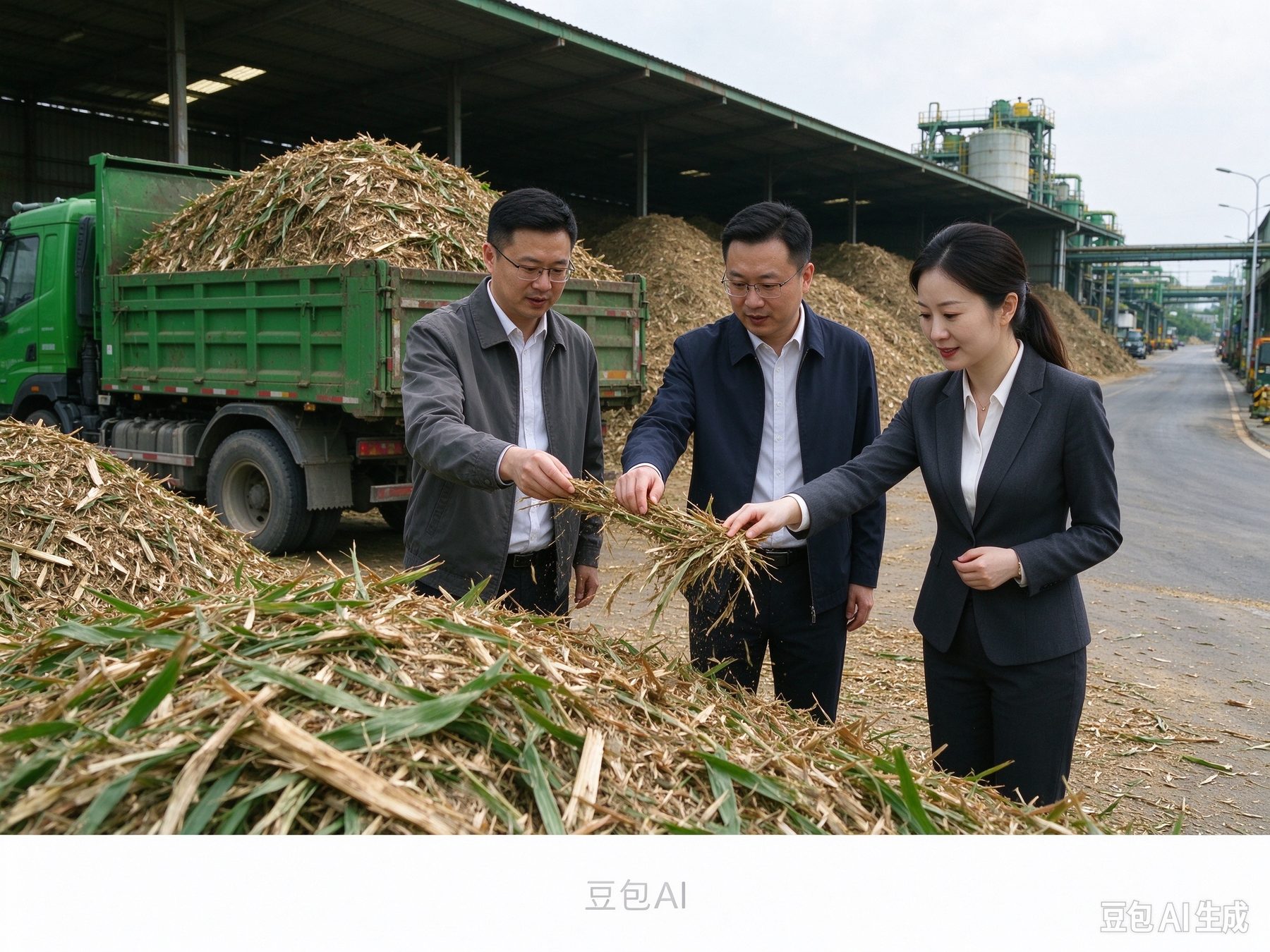
【绿色燃料国际商务网】获悉,制取一标准立方米氢气,传统电解水一般需要4.5到6度电,中南大学刘伟教授团队的示范产线把这个数字压到了3.2度,比传统路线省下近一半电。公开信息显示,该团队的技术路线是从废弃生物质和有机废液里制氢:生物质和有机废液本身携带能量,经自研催化剂低温降解后进入电解环节,产氢能耗大幅降低;传统电解水相当于“拿电硬把水劈开”,该路线则让废液里的能量先参与供能,电力只承担剩余部分。这项技术已在中南大学(崇左)新质生产力产业基地的中试产线上稳定运行两个多月,正在叩响产业化的大门。
从实验室到工程产线,中间横着一条业内俗称的“死亡之谷”,无数好技术停滞在这段没有标准答案的距离上。该项披露的信息显示,生物质电解制氢技术迈过这一步的地方,就是中南大学(崇左)新质生产力的中试基地;团队搭建起年处理2500公斤级废弃物的制氢装置,用一年时间完成了从实验室到工程放大的关键跨越,装置不大,却是技术第一次以“产线”的方式运转起来。目前技术成熟度已达五至六级,中试示范完成,中试数据已提交中石化用于工艺包设计。
刘伟还担任长沙新能源创新研究院副院长,公开报道显示,其工作方向主要有两个:把学校里的氢能技术往外推,把企业的攻关需求往回带。长沙新能源创新研究院为氢能项目提供对外展示的窗口,也经常组织团队参加行业会议,让更多早期技术被看见;已有顶材科技、汇铁新材料、经源科技等多家公司,在湖南湘江新区就地孵化转化。同时,在牵线搭桥之下,扬州、苏州等地的氢能设备企业已多次来湘考察,围绕质子膜和电极材料方向的合作正在洽谈之中。
这项技术最大的特点是“不挑食”,却又很“挑”商业化路线。公开信息显示,多种生物质都能电解制氢,但来源不稳定,今天收秸秆、明天收药渣,成分不一样工艺就得调,工业废弃物首先集中、成分稳定,由此产业化版图形成“多线并跑”:与中石化合作处理乙二醇废液;用来处理生物质热裂解制生物硬碳过程中产生的烟气,实现高端电极材料产出与制氢;也用来处理生物质精炼过程中比如HMF的生产产生的废弃物,实现高附加值化学品的产出与制氢;甚至延伸到处理工业废弃硫化物同时制氢。商业模式上,团队选择轻资产运行:技术授权给有场景、有建设能力的央企,由对方投资运营,团队专供电堆、膜材料、催化剂等核心部件。
团队还有更完整的设想——打造“闭合零碳园区”。公开报道显示,园区里的废弃物运到外面去处理,园区里的重卡烧着柴油跑运输,两头都是碳排放;设想的场景是把制氢装置直接建在化工或制药园区里,废液原地处理,就地产氢,园区内建起加氢站,氢能重卡来卸货时顺便加满氢。此外,氢气还可就地发电供热,或作为化工、冶金、制药加氢反应的原料。目前湖南某药厂的化工园区已有与团队合作的意向,双方正在探讨用制药废液制氢的可行性。该项披露的信息显示,氢能重卡具备车辆有固定路线、场景好组织、成本也最低等条件;湖南工程机械巨头的新能源化改造让氢能重卡有了落地土壤,省内药厂、化工园区众多,正是“闭合园区”的天然试验场。
这个设想与湖南新一轮氢能布局相吻合。2025年6月,湖南省发展改革委印发《湖南省氢能产业发展三年行动方案》,明确到2027年初步构建“一港两廊多区”发展格局;方案提出,以混凝土搅拌车、起重机、泵车、矿卡等工程机械领域典型应用场景为牵引,湖南湘江新区正是重点试点区域之一。公开信息显示,从年处理2500公斤级废弃物的中试产线稳定运行两个多月、中试数据提交中石化用于工艺包设计,到闭合零碳园区设想中的加氢站与氢能重卡,再到省级行动方案划定的工程机械应用场景,该技术的小试、中试、产业化与场景落地各环节均有对应的事实节点。
[Green Fuel International Business Network] has learned that producing one standard cubic meter of hydrogen using traditional water electrolysis generally requires 4.5 to 6 kWh of electricity. The demonstration production line by Professor Liu Wei's team at Central South University has reduced this number to 3.2 kWh, saving nearly half the electricity compared to the traditional method. Public information shows that the team's technical route is to produce hydrogen from waste biomass and organic waste liquids: biomass and organic waste liquids themselves contain energy, which, after low-temperature degradation by self-developed catalysts, enter the electrolysis stage, drastically reducing hydrogen production energy consumption. Traditional water electrolysis is equivalent to 'using electricity to forcibly split water,' while this route allows the energy in waste liquids to first contribute to the energy supply, with electricity only covering the remaining portion. This technology has been stably running for more than two months on the pilot production line at Central South University (Chongzuo) New Productivity Industrial Base and is knocking on the door of industrialization.
From the laboratory to the engineering production line, there is a so-called 'valley of death' in the industry, where countless promising technologies stall in this distance without a standard solution. The disclosed information shows that the place where biomass electrolysis hydrogen production technology has crossed this gap is the pilot base for new productive forces at Central South University (Chongzuo). The team built a hydrogen production device capable of processing 2,500 kilograms of waste per year, completing the critical leap from laboratory to engineering scale within a year. The device is not large, but it is the first time the technology has operated in a 'production line' mode. Currently, the technology maturity has reached levels five to six, the pilot demonstration is completed, and the pilot data has been submitted to Sinopec for process package design.
Liu Wei also serves as the Deputy Director of the Changsha New Energy Innovation Research Institute. Public reports indicate that his work mainly focuses on two aspects: promoting hydrogen energy technology from the university to the outside world, and bringing back the research and development needs of enterprises. The Changsha New Energy Innovation Research Institute provides a platform to showcase hydrogen energy projects externally and frequently organizes teams to participate in industry conferences, allowing more early-stage technologies to be seen; several companies, including Top Materials Technology, Hui Tie New Materials, and Jingyuan Technology, have already incubated and transformed locally in the Hunan Xiangjiang New Area. At the same time, through networking and facilitation, hydrogen energy equipment companies from places like Yangzhou and Suzhou have visited Hunan multiple times for inspections, and cooperation discussions regarding proton membranes and electrode materials are currently underway.
The biggest feature of this technology is that it is 'not picky,' yet it is very 'selective' in terms of commercialization routes. Public information shows that various biomass sources can be electrolyzed to produce hydrogen, but their availability is unstable—today it's straw, tomorrow it's medicinal residues, and the composition varies, requiring process adjustments. Industrial waste, on the other hand, is first centralized and compositionally consistent. This has shaped a 'multi-track' industrialization pattern: cooperating with Sinopec to handle glycol waste liquid; using it to treat flue gas generated in the pyrolysis of biomass to produce bio-hard carbon, achieving both high-end electrode material output and hydrogen production; also using it to treat by-products from biomass refining processes, such as those generated during HMF production, achieving both high-value chemical output and hydrogen production; and even extending to the treatment of industrial waste sulfides while producing hydrogen. In terms of the business model, the team has chosen a light-asset operation: the technology is licensed to state-owned enterprises that have the scenarios and construction capabilities, with the latter investing and operating, while the team exclusively supplies core components such as stacks, membrane materials, and catalysts.
The team also has a more complete concept—creating a 'closed-loop zero-carbon park.' Public reports show that the waste in the park is sent outside for treatment, and the heavy trucks in the park run on diesel for transportation, both of which result in carbon emissions. The envisioned scenario is to build hydrogen production facilities directly within chemical or pharmaceutical parks, treat waste liquids on-site, produce hydrogen locally, and construct hydrogen refueling stations within the park so that hydrogen-powered heavy trucks can refuel while unloading. In addition, hydrogen can be used on-site to generate electricity and heat, or as a raw material for hydrogenation reactions in chemical, metallurgical, or pharmaceutical processes. Currently, a chemical park of a pharmaceutical company in Hunan has already expressed interest in cooperating with the team, and the two parties are exploring the feasibility of producing hydrogen from pharmaceutical waste liquids. The disclosed information indicates that hydrogen-powered heavy trucks have conditions such as fixed routes, well-organized scenarios, and the lowest costs. The new energy transformation of a Hunan construction machinery giant provides fertile ground for hydrogen-powered heavy trucks, and with numerous pharmaceutical and chemical parks in the province, it is the natural testing ground for a 'closed-loop park.'
This concept aligns with the new round of hydrogen energy planning in Hunan. In June 2025, the Hunan Provincial Development and Reform Commission issued the "Three-Year Action Plan for the Development of the Hydrogen Energy Industry in Hunan Province," specifying the goal of initially establishing a "one port, two corridors, multiple zones" development pattern by 2027; the plan proposes using typical application scenarios in the construction machinery sector—such as concrete mixers, cranes, pump trucks, and mining trucks—as a driving force, with the Xiangjiang New Area in Hunan being one of the key pilot regions. Public information shows that from the stable operation of a pilot production line handling 2,500 kilograms of waste per year for more than two months, to the submission of pilot data to Sinopec for process package design, to the hydrogen refueling stations and hydrogen heavy trucks envisioned in the zero-carbon closed-loop park, and further to the construction machinery application scenarios outlined in the provincial action plan, the small-scale experiments, pilot tests, industrialization, and scenario implementation of this technology all have corresponding factual milestones.
[Source: Hunan Daily]
[Editor: Xiao Neng]
本网站摘录或转载的属于第三方的信息,目的在于传递更多信息,内容仅供参考。相关股票、投融资等资讯及分析并不代表本网站赞同其意见和对其真实性负责,不构成投资建议。
若不慎涉及侵权,请在相关内容刊发之日起 30 日内联系我们,我们将第一时间进行删除处理。
转载本网资讯请注明来源作者。本网原创文章、研究报告禁止转发。
Information excerpted or reprinted from third parties on this website is intended to convey more information for reference only. Related stocks, investment and financing news and analysis do not represent the endorsement of this website, nor does this website assume responsibility for their authenticity, and do not constitute investment advice.
If any content unintentionally infringes upon rights, please contact us within 30 days from the date of publication, and we will remove it as soon as possible.
When reprinting content from this website, please indicate the source and author. Original articles and research reports of this website may not be redistributed.
提交留言Submit message留下联系方式,平台将把您的需求推送给匹配的产业方Leave your contact details and we will match you with relevant industry partners.
数据来源与口径说明:本平台数据与资讯均以「唯一官方口径」采集与发布,优先采用国家部委、国家统计局、海关总署、中国氢能联盟、IEA / IRENA / IMO 等官方或政府间机构公开数据;同一指标只取一个来源,不做多源拼接。数值为公开发布值,可能因统计口径、产地与发布时间不同而存在差异,仅供参考,不构成交易依据。Data sources and methodology: all data and news on this platform are collected and published from a single official source, giving priority to public data from government bodies and intergovernmental organisations such as the National Bureau of Statistics, the General Administration of Customs, the China Hydrogen Alliance, and IEA / IRENA / IMO. One indicator has one source only and is never stitched together from multiple sources. Figures are published values and may vary with statistical scope, origin and release date. For reference only; not a basis for transactions.
相关信息Related Information同栏目 · 可直接进入各自最终页Same section · each opens its own final page
- 航天炉"点煤成金":从我国第一台自主粉煤加压气化炉到零碳负碳技术转型2026-10-12
- 18至25元对15元:绿氢成本逼近灰氢那一刻,8%至10%的项目收益是靠什么撑起来的2026-10-11
- 视频|海水制氢,中国突破!2026-10-11
- 陕西研制液氢航空地面保障系统完成全流程一体化测试2026-10-11
- 1121.05兆瓦与1062MW:2026上半年电解槽订单两个口径的差,与份额集中到46%的真相2026-10-11
- 从“气”到“氢”的一字之变 四川资阳打造成渝氢走廊氢源配送中心2026-10-10