
煤制烯烃的工艺路线分野:甲醇制烯烃迭代、气化路线选择与绿氢耦合边界Process route differentiation for coal-to-olefins: methanol-to-olefins iteration, gasification route selection, and green hydrogen coupling boundaries
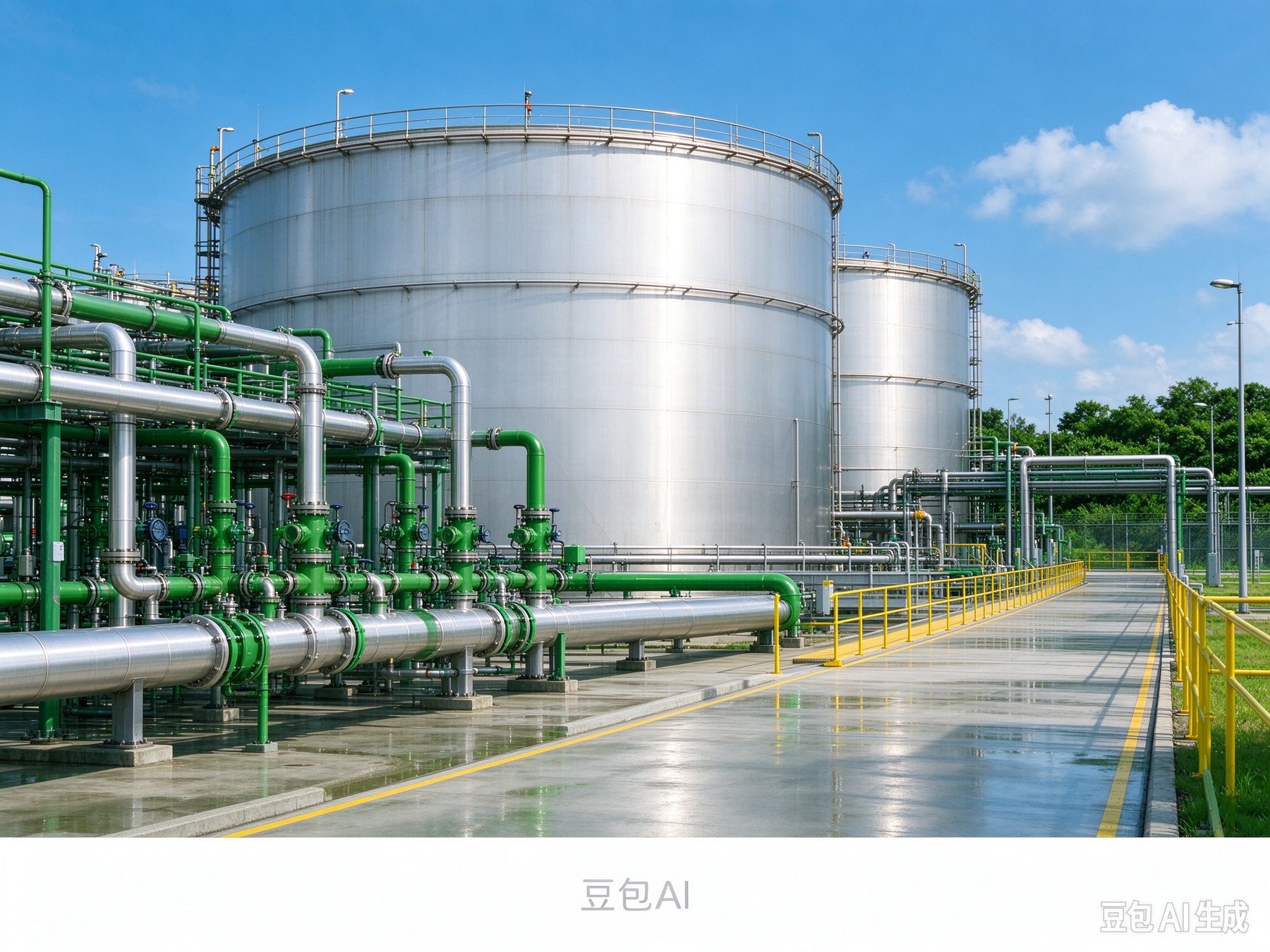
2026年10月16日,宁夏煤业MTP工艺技术升级改造项目迎来一个标志性节点:世界首套、全球单套规模最大的360万吨/年甲醇制烯烃装置反应器封头及核心组件精准吊装就位,反应器与再生器吊装圆满完成。这套装置依托中国科学院大连化学物理研究所自主知识产权的三代甲醇制烯烃技术,总投资约118亿元,向上延伸煤炭清洁高效转化产业链,向下补齐高端聚烯烃新材料生产线。把这个节点放回整条煤制烯烃链条上看,它标记的不是一次设备安装的完成,而是一条工艺路线在规模放大临界点上的技术定形。围绕这条路线,当期最值得厘清的技术问题有三组:甲醇制烯烃工艺本身的迭代方向、气化路线选择带来的综合能耗差异、以及催化剂积碳与绿氢耦合这两个配套环节各自的工程边界。
甲醇制烯烃的迭代逻辑:单耗下降与选择性提升的取舍
甲醇制烯烃是煤制烯烃链条上最核心的工艺单元,它决定整个项目的转化效率、原料单耗与经济效益。这项技术由中国科学院大连化学物理研究所研发,原理并不复杂:甲醇在改性分子筛催化剂表面发生脱水反应生成二甲醚,二甲醚进一步转化为低碳烯烃,真正决定技术水平的,是催化剂活性、选择性与稳定性的组合,以及反应器内焦炭分布的工程设计。
按公开研究报告援引的相关文献口径,工艺演进有三代清晰台阶。第一代解决了从实验室到工业示范的关键问题,吨烯烃甲醇单耗约3.0吨,甲醇转化率约99%,双烯收率约80%,以神华包头60万吨/年装置为代表。第二代把单耗降至2.67吨,双烯收率提升至95%以上,并通过引入碳四回炼提高碳资源利用效率。第三代的突破点不在单耗数字本身,而在反应器设计与催化剂焦炭分布的优化:据西南证券援引《中国工程科学》相关文献的表述,三代工艺无需回收碳四即可把烯烃选择性提升至85%至90%,吨烯烃甲醇单耗降至2.6至2.7吨,11米密相流化床甲醇进料达3000千吨每年,单套装置产能高达1150千吨每年且不增加资本开支。
这里有一处必须讲清楚的口径差异。公开研究中同时存在两个数字:一份研究报告给出三代工艺吨烯烃甲醇单耗2.65吨、甲醇转化率99.06%,而煤化工行业媒体在报道同类装置时给出的口径是2.66吨左右。两者相差0.01吨,折算到百万吨级烯烃产能上并不显眼,但公开信息未披露二者的核算边界与统计口径差异,此处并列陈述不做调和。
真正值得关注的不是这两个数字孰高孰低,而是选择性口径的变化。前两代工艺的双烯收率与第三代工艺的烯烃总选择性并非同一个指标体系:前者统计乙烯与丙烯,后者把碳四及以上烯烃一并纳入,回收与否直接决定选择性数字的差异。因此,一份把三代工艺的单耗与选择性直接排成一行对比的做法并不严谨,严谨的做法是先把口径还原到同一分母上再比较。
规模化方面也有一个可核的公开数字:截至2020年,甲醇制烯烃技术已许可工业化装置25套,涉及烯烃产能1458万吨每年,市场占有率67.9%。这个数字的时间锚点很重要,它反映的是2020年前后的产业格局,但它给出的启示至今有效——中国在这条工艺上的自主化程度,已经使技术许可本身成为产业链输出的商品。
气化路线的选择逻辑:炉型、碳转化率与副产蒸汽
决定一套煤制烯烃装置综合能耗的,往往不是最核心的甲醇制烯烃单元,而是最前端的合成气制备。气化路线的选择,本质上是在碳转化率、蒸汽自给率与设备投资之间做三角权衡。
以宁夏煤业本次吊装的装置为例,其上游配套甲醇合成与烯烃分离构成从合成气到基础化工原料的完整链条。另一条同期在建路线提供了对比参照:据中国石油和化工网2026年10月报道,中石化长城能源化工(内蒙古)有限公司大路煤制烯烃升级示范项目超长周期设备提前采购及部分主项一段设计获总部工程装备部正式批复,同意提前启动54台套超长周期设备采购。该项目位于鄂尔多斯市准格尔旗大路工业园区,可研批复总投资245亿元,规划总占地4541.96亩,设计原料煤用量333.2万吨每年、新鲜水用量774.15万立方米每年;主体工程共12套生产装置,涵盖空分、煤气化、变换、酸性气体脱除、制冷及压缩、甲醇合成、硫回收、甲醇制烯烃、环管聚丙烯、气相聚丙烯、聚乙烯、乙烯与醋酸乙烯共聚物等;产品方案为45万吨每年聚丙烯、35万吨每年聚乙烯、10万吨每年乙烯与醋酸乙烯共聚物及低密度聚乙烯,副产硫磺。
这份技术方案里有三处值得单独拎出来。气化环节选用半废锅流程,单炉日投煤3500吨级;甲醇合成按单系列226万吨每年配置,甲醇制烯烃装置同样按226万吨每年配置,并配套烯烃催化裂解单元;更关键的是,空分等核心大型设备全部采用电机驱动,全面取消燃煤锅炉,电气化水平较传统煤化工方案有明显提升,并植入绿氢耦合制烯烃环节,配套电解水制氢装置,外购绿电占比超90%。
取消燃煤锅炉这一项的分量常常被低估。传统煤化工装置的公用工程自备锅炉既是蒸汽源,也是燃料消耗的出口;把它换成电机驱动与外购绿电之后,项目的碳强度结构发生了实质变化:燃料侧碳排放被转移到了电力侧。这条路的可行性完全取决于外购绿电能否稳定获取及其价格水平,而非技术难度。
装置放大的工程难点:反应器重量与工期纪录
宁夏煤业在2026年10月16日这次吊装创造的三项纪录,全部指向工程放大而非工艺创新。其一,建成全球单套规模最大的360万吨每年三代甲醇制烯烃反再装置;其二,装配世界同类型甲醇制烯烃装置单体最重反应器,该反应器最大直径19.2米、总高40.1米、总重达2658.135吨(含衬里),内部搭载54台高精度旋风分离器;其三,实现同类大型反再装置百天极速完工,创下行业最短施工周期新标杆。据宁夏煤业消息,项目团队历经100天极限攻坚,完成超限设备运输、筒体组对、旋风装配、双机协同吊装等全链条工序,较国内同规模同类装置施工周期提前近60天。
2658.135吨这个数字背后是材料与制造工艺的双重约束。反应器与再生器要在高温高压下完成含氧化合物与甲醇的转化,筒体与内构件的选材、焊接与热处理质量直接决定运行周期的长短;衬里则要在多相介质冲刷下维持结构完整性。重量超过两千吨,运输与吊装就成为独立的关键工序,54台旋风分离器要在母体内部完成装配,容差控制难度可见一斑。
值得注意的是2026年10月16日这次吊装的工程意义不止于纪录本身。项目团队把施工周期较同规模同类装置提前近60天,对处在产能紧张周期里的煤化工项目而言,这是实质性的投产时间差。而超长周期设备从批复到到场往往是项目关键路径上的核心环节,中石化长城能源化工大路项目2026年10月先行批复54台套超长周期设备采购的做法,说明行业已经普遍把设备制造周期当作项目决策的起点而非施工阶段的问题。
催化剂积碳:离线化验留下的数据盲区
甲醇制烯烃装置运行得稳不稳,很大程度上取决于催化剂积碳的监测方式。积碳含量直接关系产品选择性,而长期以来工业生产中的催化剂积碳量数据,主要依赖人工取样后送至化验室离线分析测得。榆林中科洁净能源创新研究院2026年10月28日的公开信息对这一现状的描述很直接:手动取样存在烫伤风险、结果滞后,难以及时指导工业装置工艺参数的优化。
该研究院与北京赛普泰克技术有限公司签署技术转让(技术实施许可)合同,将自主开发的催化剂积碳测量软件系统及配套分析仪器设备以普通许可方式许可后者使用。按合同约定,该系统将集成至受让方的数字孪生系统与工艺优化平台,并在中煤陕西能源化工集团有限公司的甲醇制烯烃装置现场部署。从技术路径上看,这套软件与配套定碳分析仪共同构成积碳在线检测分析系统,将布置在装置反再循环管线取样口,由软件控制实现催化剂在线取样与积碳量分析并反馈。
这项转化的意义有两层。对装置运行而言,它把积碳从化验室报表变成了工艺参数闭环的一部分,当积碳量出现偏离时,操作侧有机会在选择性下降之前介入调整。对转化路径而言,它走通了从实验室方法到工业装置现场验证的完整闭环:项目完成验收后,在线测量积碳数据将接入装置数字孪生系统,为操作优化与智能化运行提供实时数据支撑。一个容易被忽略的技术前提是取样位置的选择——反再循环管线取样口能代表主流催化剂的积碳状态,而人工取样受取样点代表性限制,两者积累的偏差正是这套系统要消除的对象。
绿氢耦合的真实边界:吨产品碳排放与审批约束
绿氢耦合是煤制烯烃降低碳强度的主要技术路径,但其可行性受两个硬性条件约束。第一个是碳强度的绝对水平。据煤化工行业媒体2026年10月的报道口径,内蒙古荣信80万吨每年甲醇制烯烃装置于2026年10月12日完成中间交接,采用中科院大连化物所的三代甲醇制烯烃技术,该技术能把每吨烯烃的甲醇消耗量降至2.66吨左右,相比行业早期平均水平每生产一吨烯烃能省下近300公斤甲醇;同一篇报道同时提示,煤制烯烃虽被公认为盈利水平最好的现代煤化工路线,盈亏平衡点约在油价40至45美元每桶,但同时属于高耗能、高排放产业,单套80万吨烯烃装置的吨产品碳排放量约为11.1吨,将直接转化为运营成本。
第二个是审批与能耗指标的收紧。2026年10月30日对外发布的江苏省重点行业节能降碳改造攻坚三年行动方案明确,加快100万吨/年以下煤制甲醇、固定层间歇气化、铜洗法氨合成原料气净化等装置和工艺改造升级,推广水冷壁型水煤浆气化、低压氨合成、高效催化剂、等温变换、甲醇富液余压发电等技术,并推动二氧化碳生产甲醇、可降解塑料、碳酸二甲酯等产品,支持二氧化碳低成本捕集变换制氢技术产业化试验与应用;同一方案在煤电行业部分提出推动具备条件的30万千瓦以上现役煤电机组掺烧生物质、绿氨等绿色燃料,加装储能储热设施,实施低碳化改造后度电碳排放降低10%至20%,力争降低20%以上,并对符合条件的节能降碳改造项目按不超过单个项目总投资的15%给予资金补助。
把这两项条件与装置规模放在一起看,结论是清楚的:单套装置规模越大,吨产品的固定投资摊薄越明显,碳强度的绝对值越值得压降,而绿氢的边际贡献也越容易被放大。一套全球单套规模最大的甲醇制烯烃装置之所以同时配套绿氢耦合设计,其逻辑正是规模带来的碳强度管理杠杆。反过来看,绿氢耦合的落地条件也在变严——外购绿电占比、能耗指标、碳排放空间与产能置换这类审批变量,正在把绿氢从一项可选技术变成一项准入条件。
把三条线索合起来看技术路线的走向
气化与合成气制备决定了能耗的底座,甲醇制烯烃工艺决定了单耗与选择性的上限,催化剂积碳监测与绿氢耦合决定了运行稳定性与碳强度的边界。三组问题的技术难度不同,但耦合方式一致:任何一环的短板都会立刻反映到另外两环上。
对2026年10月16日这次吊装给出的判断是:装置放大的工程瓶颈正在被逐个击破,反应器重量与工期纪录说明制造与施工环节已经适应了百万吨级规模;而真正还没有被完全解决的,是运行期数据的连续性——积碳在线测量的工程化刚开始落地,其在多套百万吨级装置上的长期稳定性仍有待验证;绿氢耦合的边界则不在技术,而在电力的可得性与成本。煤制烯烃在可预见的时间内不会离开这条路线,但决定它能走多远的,已经从化学工程问题变成了数据问题与电力问题。
本文参考资料来源于宁夏煤业、内蒙古荣信、中国石油和化工网等企业公开信息;中国科学院大连化学物理研究所、榆林中科洁净能源创新研究院、国家能源局、江苏省发展改革委等机构与官方公开信息;《洁净煤技术》等行业期刊及中国能源新闻网等媒体报道。
On October 16, 2026, the Ningxia Coal Industry MTP process technology upgrade project reached a landmark milestone: the world’s first and the largest single-unit 3.6 million tons/year methanol-to-olefins (MTO) plant reactor head and core components were precisely lifted and installed, and the lifting of the reactor and regenerator was successfully completed. This unit relies on the third-generation MTO technology developed with independent intellectual property rights by the Dalian Institute of Chemical Physics, Chinese Academy of Sciences, with a total investment of approximately 11.8 billion yuan. It extends the clean and efficient coal conversion industry chain upstream and fills the high-end polyolefin new material production line downstream. Placed back into the entire coal-to-olefins chain, this milestone does not mark the completion of a single equipment installation but represents the technological solidification of a process route at the critical point of scale-up. Around this route, the three most important technical issues to clarify at the current stage are: the iteration direction of the MTO process itself, the differences in comprehensive energy consumption caused by the choice of gasification route, and the engineering boundaries of two supporting aspects: catalyst carbon deposition and green hydrogen coupling.
The iteration logic of methanol-to-olefins: the tradeoff between reducing consumption and improving selectivity
Methanol-to-olefins is the most critical process unit in the coal-to-olefins chain, as it determines the overall project conversion efficiency, raw material consumption, and economic benefits. This technology was developed by the Dalian Institute of Chemical Physics, Chinese Academy of Sciences, and its principle is not complicated: methanol undergoes a dehydration reaction on the surface of modified molecular sieve catalysts to produce dimethyl ether, which is further converted into light olefins. What truly determines the level of the technology is the combination of catalyst activity, selectivity, and stability, as well as the engineering design of coke distribution within the reactor.
According to the relevant literature cited in publicly available research reports, the technological evolution has three clear stages. The first generation addressed the key issues of scaling from laboratory to industrial demonstration, with a methanol consumption of about 3.0 tons per ton of olefin, a methanol conversion rate of about 99%, and a diene yield of about 80%, represented by Shenhua Baotou’s 600,000-ton/year facility. The second generation reduced consumption to 2.67 tons, increased diene yield to over 95%, and improved carbon resource utilization by introducing C4 recycling. The breakthrough of the third generation lies not in the consumption numbers themselves, but in the optimization of reactor design and catalyst coke distribution: according to Southwest Securities citing the relevant literature in "Chinese Engineering Science," the third-generation process can increase olefin selectivity to 85%–90% without recovering C4, reduce methanol consumption per ton of olefin to 2.6–2.7 tons, achieve a methanol feed of 3 million tons per year in an 11-meter dense-phase fluidized bed, and reach a single-unit capacity of up to 1.15 million tons per year without increasing capital expenditure.
There is a difference in measurement standards that must be clearly explained here. In publicly available research, two figures exist simultaneously: one research report indicates that the per-ton methanol consumption for third-generation processes is 2.65 tons with a methanol conversion rate of 99.06%, while coal chemical industry media report a figure of around 2.66 tons for similar units. The difference between the two is 0.01 ton, which is not significant when converted to million-ton-level olefin capacity, but public information does not disclose the accounting boundaries and statistical standard differences between the two. Therefore, both figures are presented side by side without trying to reconcile them.
What is truly worth noting is not which of the two numbers is higher or lower, but the change in selective measurement standards. The diene yield of the first two generations of processes and the total olefin selectivity of the third-generation process do not belong to the same indicator system: the former accounts for ethylene and propylene, while the latter includes C4 and higher olefins, and whether they are recovered directly determines the difference in selectivity figures. Therefore, directly lining up the per-ton consumption and selectivity of the third-generation process for comparison is not rigorous; the rigorous approach is first to normalize the standards to the same denominator before making a comparison.
There is also a verifiable public figure regarding scale: as of 2020, methanol-to-olefins technology had been licensed for 25 industrial-scale units, involving an olefin production capacity of 14.58 million tons per year, with a market share of 67.9%. The timing of this figure is important, as it reflects the industry landscape around 2020, but the insight it provides is still valid today — China’s degree of autonomy in this process has made the technology license itself a commodity for exporting the industrial chain.
Logic behind the choice of gasification route: furnace type, carbon conversion rate, and by-product steam
What often determines the overall energy consumption of a coal-to-olefins plant is not the core methanol-to-olefins unit, but the front-end synthesis gas preparation. The choice of gasification route is essentially a triangular trade-off between carbon conversion rate, steam self-sufficiency, and equipment investment.
Taking the device hoisted by Ningxia Coal Industry this time as an example, its upstream supporting methanol synthesis and olefin separation constitute a complete chain from syngas to basic chemical raw materials. Another line under construction at the same time provides a point of comparison: according to a report by China Petroleum & Chemical Network in October 2026, Sinopec Great Wall Energy & Chemical (Inner Mongolia) Co., Ltd.'s Dalu Coal-to-Olefins Upgrading Demonstration Project had its ultralong-cycle equipment procured in advance and part of the first-phase main design officially approved by the headquarters' Engineering Equipment Department, allowing the advance start of procurement for 54 sets of ultralong-cycle equipment. The project is located in Dalu Industrial Park, Zhungeer Banner, Ordos City, with a total approved investment of 24.5 billion yuan, planned total land area of 4,541.96 mu, and designed annual coal consumption of 3.332 million tons and fresh water usage of 7.7415 million cubic meters per year.
The main project consists of 12 production units, covering air separation, coal gasification, conversion, acidic gas removal, refrigeration and compression, methanol synthesis, sulfur recovery, methanol-to-olefins, loop polypropylene, gas-phase polypropylene, polyethylene, ethylene and vinyl acetate copolymer, etc. The product plan targets an annual output of 450,000 tons of polypropylene, 350,000 tons of polyethylene, 100,000 tons of ethylene and vinyl acetate copolymer and low-density polyethylene, with sulfur as a by-product.
There are three points in this technical plan worth highlighting separately. In the gasification segment, a semi-waste heat boiler process is selected, with a single furnace daily coal throughput of 3,500 tons. Methanol synthesis is configured for an annual production of 2.26 million tons per single series, and the methanol-to-olefins unit is also designed for 2.26 million tons per year, with a supporting olefin catalytic cracking unit. More importantly, all core large equipment such as air separation units are entirely motor-driven, completely eliminating coal-fired boilers. The level of electrification is significantly higher compared to traditional coal chemical processes, and a green hydrogen-coupled olefin production process is integrated, supported by an electrolytic water hydrogen production unit, with more than 90% of externally purchased green electricity.
The significance of canceling coal-fired boilers is often underestimated. The captive boilers in traditional coal chemical plants provide both steam and fuel consumption output; after replacing them with motor-driven equipment and purchased green electricity, the project's carbon intensity structure undergoes a substantial change: carbon emissions on the fuel side are transferred to the electricity side. The feasibility of this approach entirely depends on whether purchased green electricity can be reliably obtained and its price level, rather than on technical difficulty.
Engineering difficulties associated with scaling up the units: reactor weight and project schedule records
On October 16, 2026, Ningxia Coal Industry set three records during this hoisting, all pointing to engineering scale rather than technological innovation. First, it built the world's largest single-unit third-generation methanol-to-olefins (MTO) back-end unit with an annual capacity of 3.6 million tons; second, it installed the heaviest reactor in a single unit of a similar type of MTO facility in the world, with a maximum diameter of 19.2 meters, a total height of 40.1 meters, and a total weight of 2,658.135 tons (including lining), internally equipped with 54 high-precision cyclone separators; third, it achieved a completion speed of 100 days for a similar large-scale back-end unit, setting a new industry benchmark for the shortest construction period. According to Ningxia Coal Industry, the project team went through 100 days of extreme efforts, completing the entire chain of processes including oversized equipment transport, cylinder assembly, cyclone assembly, and dual-machine coordinated hoisting, completing nearly 60 days ahead of the construction schedule for similar domestic units of the same scale.
Behind the figure of 2,658.135 tons lie dual constraints of materials and manufacturing processes. The reactor and regenerator must complete the conversion of oxygen-containing compounds and methanol under high temperature and high pressure, and the selection of materials, welding, and heat treatment quality of the shell and internal components directly determine the length of the operational cycle; the lining must maintain structural integrity under the erosion of multiphase media. With a weight exceeding two thousand tons, transportation and lifting become independent critical operations, and the assembly of 54 cyclone separators inside the main body reveals the difficulty of tolerance control.
It is worth noting that the hoisting on October 16, 2026, has engineering significance beyond the record itself. The project team shortened the construction period by nearly 60 days compared to similar-scale installations, which represents a substantive difference in commissioning time for coal chemical projects facing tight capacity cycles. For ultra-long-cycle equipment, the period from approval to arrival is often a key link on the project’s critical path. The approach of Sinopec Great Wall Energy Chemical Dalü Project in pre-approving the procurement of 54 sets of ultra-long-cycle equipment in October 2026 indicates that the industry generally regards equipment manufacturing cycles as the starting point for project decisions rather than an issue during the construction phase.
Catalyst carbon deposition: Data blind spots left by offline testing.
Whether a methanol-to-olefins unit operates stably largely depends on the method used to monitor catalyst coking. The coke content is directly related to product selectivity, and for a long time, data on catalyst coking in industrial production have mainly relied on manual sampling followed by offline analysis in a laboratory. The public information from Yulin Zhongke Clean Energy Innovation Research Institute on October 28, 2026, described this situation very directly: manual sampling carries the risk of burns, has delayed results, and makes it difficult to promptly guide the optimization of process parameters in industrial units.
The research institute signed a technology transfer (technology implementation license) contract with Beijing SaiPuTech Technology Co., Ltd., licensing the independently developed catalyst carbon deposition measurement software system and supporting analytical instruments and equipment to the latter under a general license. According to the contract, this system will be integrated into the transferee's digital twin system and process optimization platform, and deployed on-site at the methanol-to-olefins unit of China Coal Shaanxi Energy & Chemical Group Co., Ltd. From a technical perspective, this software, together with the supporting carbon analysis instrument, constitutes an online carbon deposition detection and analysis system, which will be installed at the sampling port of the unit's reactor recirculation pipeline. The software will control the online sampling of the catalyst, analyze the amount of carbon deposition, and provide feedback.
The significance of this transformation has two aspects. For device operation, it turns carbon deposition from a laboratory report into a part of the process parameter closed-loop. When the amount of carbon deviates, the operations side has the opportunity to intervene and make adjustments before selectivity declines. For the transformation pathway, it completes the full closed loop from laboratory methods to on-site verification in industrial devices: after project completion and acceptance, online carbon deposition measurement data will be integrated into the device's digital twin system, providing real-time data support for operational optimization and intelligent operation. A technical prerequisite that is easily overlooked is the choice of sampling location—the sampling port on the anti-recirculation pipeline can represent the carbon deposition state of the mainstream catalyst, whereas manual sampling is limited by the representativeness of the sampling point. The deviations accumulated by the two are precisely what this system aims to eliminate.
The real boundary of green hydrogen coupling: carbon emissions per ton of product and approval constraints.
Green hydrogen coupling is the main technical path for reducing the carbon intensity of coal-to-olefins, but its feasibility is constrained by two rigid conditions. The first is the absolute level of carbon intensity. According to a report from the Coal Chemical Industry Media in October 2026, Inner Mongolia Rongxin's 800,000-ton-per-year methanol-to-olefins plant completed its intermediate handover on October 12, 2026, using the third-generation methanol-to-olefins technology from the Dalian Institute of Chemical Physics, Chinese Academy of Sciences. This technology can reduce methanol consumption to about 2.66 tons per ton of olefins, saving nearly 300 kilograms of methanol per ton of olefins compared to the early industry average; the same report also indicated that although coal-to-olefins is widely recognized as the most profitable modern coal chemical route, with a break-even oil price of about 40 to 45 USD per barrel, it is also a high-energy-consumption and high-emission industry. The carbon emissions per ton of product from a single 800,000-ton olefins plant are approximately 11.1 tons, which directly translates into operating costs.
The second is the tightening of approvals and energy consumption indicators. The 'Three-Year Action Plan for Energy Saving and Carbon Reduction Renovation in Key Industries of Jiangsu Province,' released externally on October 30, 2026, clearly states that the upgrade of devices and processes such as coal-to-methanol production below 1 million tons/year, fixed-bed intermittent gasification, and gas purification for copper-ammonia synthesis should be accelerated. It promotes technologies including water-cooled wall slurry gasification, low-pressure ammonia synthesis, high-efficiency catalysts, isothermal shift, and methanol-rich liquid residual pressure power generation, and encourages the production of products like carbon dioxide-based methanol, biodegradable plastics, and dimethyl carbonate. It also supports pilot and application projects for the industrialization of low-cost carbon dioxide capture and conversion to hydrogen technology. The same plan, in part for the coal power industry, proposes promoting the co-firing of biomass, green ammonia, and other green fuels in existing coal power units above 300,000 kilowatts where conditions permit, installing energy and heat storage facilities, and implementing low-carbon renovation to reduce carbon emissions per kilowatt-hour by 10% to 20%, striving to achieve reductions of over 20%. For eligible energy-saving and carbon-reducing renovation projects, financial subsidies of up to 15% of the total investment of a single project are to be provided.
Looking at these two conditions together with the scale of the facility, the conclusion is clear: the larger the scale of a single facility, the more obvious the dilution of fixed investment per ton of product, the more worthwhile it is to reduce the absolute value of carbon intensity, and the easier it is to amplify the marginal contribution of green hydrogen. The reason why the world’s largest single methanol-to-olefins facility is also designed with green hydrogen integration is precisely the leverage for carbon intensity management brought by scale. Conversely, the conditions for implementing green hydrogen are also becoming stricter—approval variables such as the proportion of purchased green electricity, energy consumption targets, carbon emission space, and capacity replacement are turning green hydrogen from an optional technology into an entry requirement. Looking at the direction of the technical route from three lines of evidence: The gasification and synthesis gas preparation determine the baseline energy consumption; the methanol-to-olefins process determines the upper limit of specific consumption and selectivity; catalyst carbon deposition monitoring and green hydrogen integration determine the boundaries of operational stability and carbon intensity. The technical difficulty of these three issues is different, but the way they are coupled is consistent: a weakness in any one link will immediately affect the other two.
The assessment of the hoisting on October 16, 2026, is as follows: The engineering bottlenecks of scale-up in the facility are being overcome one by one. The weight of the reactor and the construction timeline records indicate that the manufacturing and construction processes have already adapted to the million-ton scale. What has not yet been fully resolved, however, is the continuity of operational data—the engineering application of online carbon deposition measurement has just begun, and its long-term stability on multiple million-ton units remains to be verified. The boundaries for green hydrogen integration lie not in technology, but in the availability and cost of electricity. Coal-to-olefins will not deviate from this path in the foreseeable future, but what determines how far it can go has shifted from a chemical engineering problem to one of data and electricity.
The references for this article are based on publicly available information from companies such as Ningxia Coal, Inner Mongolia Rongxin, and China Petroleum & Chemical Network; institutions and official sources such as the Dalian Institute of Chemical Physics of the Chinese Academy of Sciences, Yulin China Clean Energy Innovation Research Institute, National Energy Administration, and Jiangsu Provincial Development and Reform Commission; as well as industry journals like Clean Coal Technology and media reports from China Energy News Network.
本网站摘录或转载的属于第三方的信息,目的在于传递更多信息,内容仅供参考。相关股票、投融资等资讯及分析并不代表本网站赞同其意见和对其真实性负责,不构成投资建议。
若不慎涉及侵权,请在相关内容刊发之日起 30 日内联系我们,我们将第一时间进行删除处理。
转载本网资讯请注明来源作者。本网原创文章、研究报告禁止转发。
Information excerpted or reprinted from third parties on this website is intended to convey more information for reference only. Related stocks, investment and financing news and analysis do not represent the endorsement of this website, nor does this website assume responsibility for their authenticity, and do not constitute investment advice.
If any content unintentionally infringes upon rights, please contact us within 30 days from the date of publication, and we will remove it as soon as possible.
When reprinting content from this website, please indicate the source and author. Original articles and research reports of this website may not be redistributed.
提交留言Submit message留下联系方式,平台将把您的需求推送给匹配的产业方Leave your contact details and we will match you with relevant industry partners.
数据来源与口径说明:本平台数据与资讯均以「唯一官方口径」采集与发布,优先采用国家部委、国家统计局、海关总署、中国氢能联盟、IEA / IRENA / IMO 等官方或政府间机构公开数据;同一指标只取一个来源,不做多源拼接。数值为公开发布值,可能因统计口径、产地与发布时间不同而存在差异,仅供参考,不构成交易依据。Data sources and methodology: all data and news on this platform are collected and published from a single official source, giving priority to public data from government bodies and intergovernmental organisations such as the National Bureau of Statistics, the General Administration of Customs, the China Hydrogen Alliance, and IEA / IRENA / IMO. One indicator has one source only and is never stitched together from multiple sources. Figures are published values and may vary with statistical scope, origin and release date. For reference only; not a basis for transactions.
相关信息Related Information同栏目 · 可直接进入各自最终页Same section · each opens its own final page
- 航天炉"点煤成金":从我国第一台自主粉煤加压气化炉到零碳负碳技术转型2026-10-12
- 18至25元对15元:绿氢成本逼近灰氢那一刻,8%至10%的项目收益是靠什么撑起来的2026-10-11
- 视频|海水制氢,中国突破!2026-10-11
- 陕西研制液氢航空地面保障系统完成全流程一体化测试2026-10-11
- 1121.05兆瓦与1062MW:2026上半年电解槽订单两个口径的差,与份额集中到46%的真相2026-10-11
- 从“气”到“氢”的一字之变 四川资阳打造成渝氢走廊氢源配送中心2026-10-10