
十五项氢能国标落地:技术门槛从有没有转向测得准不准Fifteen national hydrogen energy standards have been implemented: the technical threshold has shifted from 'whether it exists' to 'whether it is measured accurately'.
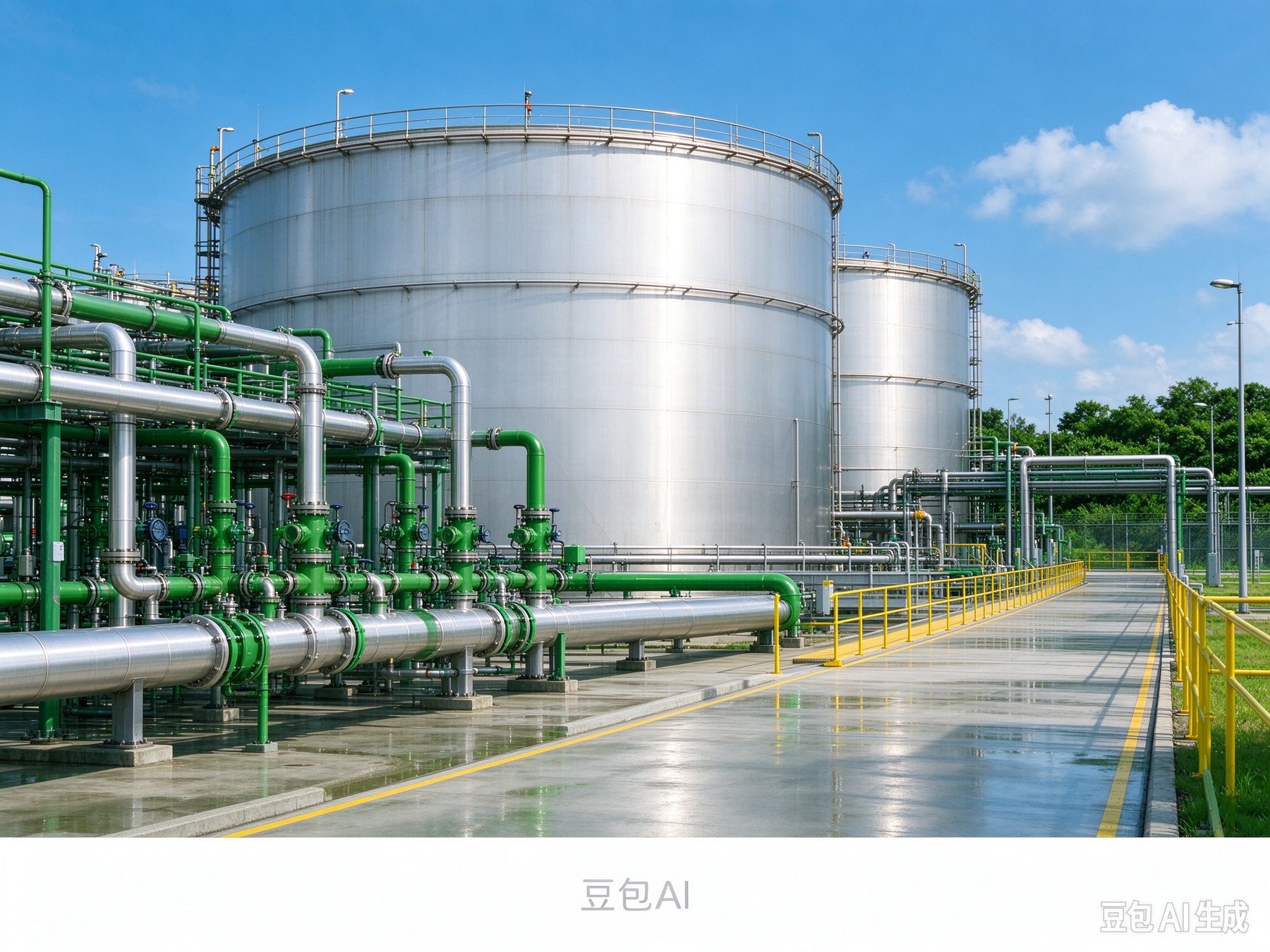
2026年9月28日,市场监管总局以2026年第43号公告集中发布15项氢能国家标准,10月14日世界标准日对外公开发布。这批标准的清单被反复转载,但清单本身不是重点。重点在结构——制氢2项、储运5项、加氢站6项、安全应用2项,储运与加氢站合计占七成以上,把有限的标准化资源集中投在了产业链上最吃紧的两段。第二个重点是技术门槛的重心发生了位移:从有没有标准,转向测得准不准、判得稳不稳。这批标准里有相当多的篇幅不是在规定某项指标的上限或下限,而是在规定怎么测、按什么流程测、测完之后怎么判。产业链走到这一步,标准化才真正开始发挥作用。
掺氢输送标准给出的工程边界
GB/T 48326—2026《天然气管道掺氢输送技术要求》2027年1月1日实施,是这批标准中最受关注的一项。它适用于陆上在役天然气长输管道掺氢输送适应性评价和运行维护,以及新建掺氢管道的运行维护,主要内容规定了一般要求、评价流程、分项评价、综合评价及改造、掺氢输送管道运行维护等环节。这套流程的技术含义是把掺氢这件事从一次性动作改造成一项有前置条件、有过程管理、有后评价的长期工程作业。
标准里有两个定义性条款值得逐字读。其一,明确掺氢天然气管道为掺氢比大于3%的输气管道——这意味着3%是一条制度分界线,掺氢比低于这一数值的管道在标准体系里仍按天然气管道管理,高于这一数值则必须走适应性评价与后评价流程。其二,要求在役天然气管道掺氢输送前进行适应性评价,掺氢输送后定期进行后评价。标准还包含掺氢天然气钢制管道管材相容性评价方法、焊缝相容性评价方法等资料性附录。这三项内容合起来解决的是一个长期存在的模糊地带:过去不同地方的掺氢试点各自摸索,材料能不能用、焊缝能不能用全靠工程判断,现在有了统一的判定依据和评价时点。
从起草单位名单可以看出这套标准的技术分量所在。据公开信息,该项标准计划号为20243598-T-469,归口单位为全国氢能标准化技术委员会,起草单位包括国家管网集团科学技术研究总院、中国标准化研究院、北京科技大学、中国石油工程建设有限公司华北分公司、宝山钢铁股份有限公司、中国石油集团工程材料研究院、北京理工大学、浙江大学、中国石油大学(华东)等二十余家。管网研究机构、钢铁企业、高校与检测机构同时出现在一份标准的起草名单里,说明这份文件处理的是一个跨越材料、管输与检测三个领域的复合问题,任何一方单独都写不出可执行的条款。
完整性管理:把油气管道的方法论搬进氢管道
GB/T 48327—2026《输氢管道系统完整性管理技术要求》同样于2027年1月1日实施,它的内容框架几乎是把油气管道成熟的完整性管理方法论移植到输氢管道上:基本规定、危害因素、数据管理、风险评价、检测和监测、完整性评价、风险削减、效能评价、应急管理、失效管理、停用与废弃、记录与文档管理、沟通和变更管理。移植不是简单照搬,因为介质变了,危害因素清单必须重写。标准要求完整性评价考虑与时间相关的危害因素,明确列出外腐蚀、内腐蚀、氢脆、氢致损伤或应力腐蚀开裂、疲劳、静电积聚等。“氢脆”与“静电积聚”这两项是天然气管道完整性管理里不存在的,它们把氢特有的物理性质写进了制度条文。
标准对检测手段的排序同样有技术含义。检测和监测手段包括地面宏观检测、内检测、外检测、压力试验和专项检测,其中地面宏观检测为必检内容,氢气管道应首先进行地面宏观检测。把最基础的目视与常规检测放在首位,而不是把内检测放在前面,逻辑是清楚的:氢气泄漏、密封失效与异常放电在地面上往往先留下可观察的痕迹,而这些痕迹是判断管道是否仍处于可用状态最经济、最快速的证据来源。在检测资源有限、管道里程快速增加的阶段,先把必检项做扎实比追求高端检测手段的覆盖率更现实。
焊缝与密封:材料准入的两道判定
GB/T 48325—2026《氢气管道焊接接头氢相容性试验方法》解决的问题很具体:管道最薄弱处在焊缝,不同焊接工艺制造的焊缝在临氢环境中的性能可能存在较大差异,因此需要针对焊缝开展系统的氢相容性评价。标准规定的常见试验包括慢应变拉伸试验、疲劳寿命试验、断裂韧度试验、疲劳裂纹扩展速率试验,并规范取样方法、测试装置、试验流程与合格指标。这四类试验的分工是有技术逻辑的:慢应变拉伸测的是材料在氢环境下的整体力学性能退化,疲劳寿命与疲劳裂纹扩展速率测的是循环载荷与裂纹扩展行为,断裂韧度测的是裂纹扩展的驱动力。管道的失效模式里,氢致延迟开裂占相当比例,而这一类失效恰恰由这几个参数共同决定。方法统一之后,判断某种焊接工艺能否用于氢管道,就有了可追溯、可复现的依据。
密封环节的标准则指向加氢站零件级的具体部件。GB/T 31138.7—2026《氢气加氢站 第7部分:橡胶O形圈》适用于密封气态氢气的高压氢气装置中橡胶O形圈及其壳体尺寸,要求O形圈能密封公称工作压力不超过70兆帕的氢气,工作温度范围零下40℃至65℃,修改采用ISO 19880-7:2025,规定了应力与应变要求以及氢气环境暴露试验方法。氢气分子极小,在高压氢环境下普通橡胶密封件内部起泡、开裂,这一失效模式被称为“氢鼓泡”。这项标准把氢气环境暴露试验列为必做项,意味着密封件的验收从出厂时的常温力学性能检查,延伸到在模拟服役氢环境中是否会发生鼓泡失效的验证。加氢软管与软管组件标准同样修改采用ISO 19880-5,适用温度范围零下40℃至65℃、加注35或70兆帕公称工作压力氢气,并新增了导电性能测试要求。
燃料质量与压缩机:一座加氢站的验收清单
GB/T 31138.8—2026《氢气加氢站 第8部分:氢燃料质量控制要求》于2027年6月1日实施,适用于质子交换膜燃料电池用氢气,修改采用ISO 19880-8:2024,规定氢气分配装置和加氢站中氢燃料质量控制规范,界定了用于车辆补充燃料的氢气所需达到的纯度指标及杂质含量限值,涉及水分、硫含量、颗粒物、一氧化碳、二氧化碳等多种关键化学组分的具体控制范围,并涉及常规与非常规条件下的质量控制方法以及质量保证计划。这项标准针对的是一个具体的失效链条:燃料电池对氢气纯度极为敏感,痕量一氧化碳或总硫即可让电堆催化剂中毒,且这类损伤往往不可逆。质量控制的标准位置因此不在加注口,而在气源侧与分配装置。
与之配套的是采样方法的标准化。GB/T 44262—2026《质子交换膜燃料电池汽车用氢气采样技术要求》于2027年6月1日实施,适用于压力等级不大于70兆帕的加氢站中氢气的采样,规定了采样设备、采样前准备、采样步骤与采样记录的要求。把采样单独做成标准,是因为取样是氢气品质检测的第一步,容器与管路若未惰性化处理或吹扫不彻底,痕量杂质的检测结果就会失真。设备侧的GB/T 48330—2026《加氢站用氢气压缩机测试方法》则针对压缩机需将氢气加压至35或70兆帕这一工况,覆盖隔膜式、活塞式等类型,检测项目包括排气压力验证、氢气纯度检测、容积效率计算与出口压力稳定性评估。至此,一座加氢站从气源、分配、压缩到加注的每一个关键节点都有了对应的技术要求。
安全检测:把哨兵装在正确的位置
GB/T 48333—2026《氢系统泄漏检测方法》与GB/T 48331—2026《固定式氢气探测装置》构成这批标准的最后两块。前者适用于车载高压储氢系统、移动式金属氢化物可逆储放氢系统、车载液氢系统及瓶式集装箱储氢系统,以及加氢站用压力容器、集装瓶组与管路的泄漏率测试,规定在安装车载氢系统和燃料电池发动机的封闭或半封闭空间的适当位置,应至少安装一个氢气浓度检测器,车辆处于工作状态时能实时检测氢气浓度并将信号传递给氢气泄漏报警装置,对封闭或半封闭空间应安装氢气泄漏探测传感器。后者修改采用ISO 26142:2010,规定固定式氢气探测装置的性能要求和试验方法,涵盖氢气探测器的精度、响应时间、稳定性、测量范围、选择性与中毒等性能要求及对应的测试方法。据国家电投集团中央研究院公开信息,该院牵头完成的国家标准GB/T 48331—2026获准发布并将于2027年1月1日实施,牵头单位同时指出该标准填补了氢能产业链安全保障装备的专项标准空白。
把这两项标准的适用范围并排看,能读出一个技术取向:泄漏检测方法覆盖的是各类储氢系统与加氢站部件的泄漏率测试,固定式探测装置针对的是场所级的浓度监测。一个解决设备出厂与检修时的泄漏率判定,一个解决运行中的浓度实时感知,两者衔接才构成完整的监测闭环。这种分层的思路与公开技术分析中关于氢气探测盲区的描述一致——点式气体探测受气流影响,泄漏氢气若被现场风场吹离探头位置,到达探头的浓度会低于报警下限;超声波检测不依赖气体到达探头而直接捕捉泄漏喷出的声波信号,可在更早阶段发现隐患;氢气燃烧火焰在白天几乎不可见且辐射热很低,通过水分子的特征光谱识别火焰可以解决常规红外火焰探测器无法有效探测的问题。三类手段的互补关系,最终由标准固定下来。
标准补齐之后:真正的三道难题
有必要把话说完整。这15项全部为推荐性国家标准,本身不具备强制约束力,但一经强制性国标、法律法规或合同引用,即对引用方产生约束力。标准补齐的实质是技术门槛与互认基线,它不解决三件事。第一是成本,绿氢成本拐点未到,标准不是电价与设备成本的答案。第二是基础设施,掺氢管道、纯氢管道与加氢网络仍需大规模投资,标准解决的是能不能建,不是建不建得起。第三是应用场景,交通之外的工业与发电场景的商业化路径仍待跑通。
还有一个容易被忽略的结构性观察。据中国复合材料工业协会的梳理,2026年9月28日集中发布的这批标准中,与高分子或纤维增强材料部件直接相关的只有加氢软管与软管组件、橡胶O形圈两项,且均于2027年1月1日实施;复合材料用量最大的储氢容器,本批一项未列。储氢容器标准族仍由GB/T 35544—2025(车用)、GB/T 19158—2025(集装及站用)、GB/T 42612—2023(车用压缩氢气塑料内胆碳纤维全缠绕气瓶)、GB/T 42610—2023(高压氢气瓶塑料内胆和氢气相容性试验方法)以及GB/Z 168—2026大容积线等单独承担。标准供给的增量正在向管网与加注端集中,容器端与材料端的推进节奏并未同步加快,这一落差会直接反映在高压气瓶的国产化进度与成本曲线上。作为参照,《中国氢能产业标准化蓝皮书(2026)》梳理显示,截至2026年8月国内现行有效氢能国家标准已达180项、正在制修订114项,示范城市群燃料电池汽车约2.7万辆、建成加氢站超250座、安全运行里程超11亿公里,我国牵头制定氢能国际标准8项、新立项13项。存量标准的规模已经不构成障碍,接下来的关键在于新增标准能否真正转化为工程语言。
本文参考资料来源于国家市场监督管理总局、国家标准化管理委员会公开标准公告与全国标准信息公共服务平台公示信息;全国氢能标准化技术委员会、国家电投集团中央研究院、中国复合材料工业协会公开发布资料;呼和浩特市场监管局、内蒙古标准信息服务网及行业媒体公开报道。
On September 28, 2026, the State Administration for Market Regulation issued 15 national hydrogen energy standards in Announcement No. 43 of 2026, which were publicly released on October 14, World Standards Day. The list of these standards has been widely reposted, but the list itself is not the focus. The focus is on the structure: 2 for hydrogen production, 5 for storage and transportation, 6 for hydrogen refueling stations, and 2 for safety and applications. Storage and transportation combined with refueling stations account for more than 70%, concentrating limited standardization resources on the two most critical segments of the industry chain. The second focus is the shift in the technical threshold: from whether there is a standard to whether measurements are accurate and judgments are consistent. In many of these standards, a substantial portion is not about specifying the upper or lower limits of an indicator, but about how to measure, the procedure to follow during measurement, and how to interpret the results. Standardization only truly starts to play its role when the industry chain reaches this stage.
Hydrogen blending transmission standards provide the engineering boundaries.
GB/T 48326—2026 "Technical Requirements for Hydrogen-Admixed Natural Gas Pipeline Transmission" will be implemented on January 1, 2027, and is the most closely watched among this batch of standards. It applies to the adaptability assessment and operation and maintenance of hydrogen-admixed transmission in existing onshore natural gas long-distance pipelines, as well as the operation and maintenance of newly built hydrogen-admixed pipelines. The main content specifies general requirements, evaluation processes, sub-item evaluations, comprehensive evaluation and transformation, and operation and maintenance of hydrogen-admixed transmission pipelines. The technical implication of this set of procedures is to transform hydrogen admixing from a one-time action into a long-term engineering operation with preconditions, process management, and post-evaluation.
There are two definitional clauses in the standard that are worth reading word for word. First, it defines hydrogen-mixed natural gas pipelines as gas transmission pipelines with a hydrogen mixing ratio greater than 3%—this means that 3% is a regulatory dividing line: pipelines with a hydrogen ratio below this value are still managed as natural gas pipelines within the standard system, while those above this value must go through adaptability assessment and post-assessment processes. Second, it requires that existing natural gas pipelines undergo an adaptability assessment before transporting hydrogen-mixed gas and conduct periodic post-assessments after transporting hydrogen-mixed gas. The standard also includes informative appendices such as the material compatibility assessment methods for steel pipelines used for hydrogen-mixed natural gas and weld compatibility assessment methods. Together, these three elements address a long-standing ambiguity: in the past, different local hydrogen-mixing pilot projects explored individually, and whether materials or welds could be used relied entirely on engineering judgment. Now, there is a unified basis for determination and assessment timing.
The technical weight of this set of standards can be seen from the list of drafting units. According to public information, the standard plan number is 20243598-T-469, the competent authority is the National Hydrogen Energy Standardization Technical Committee, and the drafting units include the National Pipeline Network Group Science and Technology Research Institute, China National Institute of Standardization, University of Science and Technology Beijing, North China Branch of China Petroleum Engineering & Construction Co., Ltd., Baoshan Iron & Steel Co., Ltd., China Petroleum Engineering Materials Research Institute, Beijing Institute of Technology, Zhejiang University, China University of Petroleum (East China), and more than twenty others. The presence of pipeline research institutions, steel enterprises, universities, and testing organizations on the drafting list of a standard indicates that this document deals with a complex issue spanning materials, pipeline transportation, and testing, and no single party could draft executable provisions on its own.
Integrity Management: Bringing the methodologies of oil and gas pipelines into hydrogen pipelines.
GB/T 48327—2026 "Technical Requirements for Integrity Management of Hydrogen Transmission Pipeline Systems" will also be implemented on January 1, 2027. Its content framework almost completely transfers the mature integrity management methodology of oil and gas pipelines to hydrogen pipelines: basic provisions, hazard factors, data management, risk assessment, inspection and monitoring, integrity evaluation, risk mitigation, performance evaluation, emergency management, failure management, decommissioning and abandonment, records and documentation management, communication and change management. The transfer is not a simple copy-paste, because the medium has changed, and the hazard factors list must be rewritten. The standard requires integrity evaluation to consider time-related hazard factors and explicitly lists external corrosion, internal corrosion, hydrogen embrittlement, hydrogen-induced damage or stress corrosion cracking, fatigue, static charge accumulation, etc. “Hydrogen embrittlement” and “static charge accumulation” are two items that do not exist in natural gas pipeline integrity management, as they incorporate hydrogen’s unique physical properties into the regulatory provisions.
The standard's ranking of inspection methods also has technical implications. Inspection and monitoring methods include surface macro inspection, internal inspection, external inspection, pressure tests, and specialized inspections, among which surface macro inspection is mandatory, and hydrogen pipelines should first undergo surface macro inspection. Placing the most basic visual and routine inspections first, rather than internal inspections, has a clear logic: hydrogen leaks, seal failures, and abnormal discharges often leave observable traces on the surface first, and these traces are the most economical and fastest sources of evidence to determine whether the pipeline is still in usable condition. At a stage when inspection resources are limited and pipeline mileage is increasing rapidly, focusing on mandatory inspections thoroughly is more practical than pursuing coverage with advanced inspection methods.
Welds and seals: The two judgments for material approval.
GB/T 48325—2026 "Test Method for Hydrogen Compatibility of Hydrogen Pipeline Welding Joints" addresses a very specific issue: the weakest point of a pipeline is at the weld seam, and welds made with different welding processes may exhibit significant differences in performance in a hydrogen environment. Therefore, it is necessary to conduct a systematic hydrogen compatibility evaluation for welds. The standard specifies common tests, including slow strain rate tensile tests, fatigue life tests, fracture toughness tests, and fatigue crack growth rate tests, while standardizing sampling methods, testing equipment, test procedures, and acceptance criteria. The division of labor among these four types of tests follows a technical logic: slow strain rate tensile tests measure the overall mechanical performance degradation of the material in a hydrogen environment; fatigue life and fatigue crack growth rate tests measure the behavior of cyclic loading and crack propagation; fracture toughness tests measure the driving force for crack propagation. Among pipeline failure modes, hydrogen-induced delayed cracking accounts for a considerable proportion, and this type of failure is precisely determined by these parameters together. After standardizing the methods, the assessment of whether a welding process can be used for hydrogen pipelines has a traceable and reproducible basis.
The standards for sealing components are directed at specific parts at the component level of hydrogen refueling stations. GB/T 31138.7—2026 "Hydrogen Refueling Stations Part 7: Rubber O-Rings" applies to rubber O-rings and their housing sizes in high-pressure hydrogen devices that seal gaseous hydrogen. It requires that the O-rings be able to seal hydrogen at a nominal working pressure not exceeding 70 MPa, with an operating temperature range from -40°C to 65°C. The revision adopts ISO 19880-7:2025, specifying stress and strain requirements as well as hydrogen environment exposure test methods. Hydrogen molecules are very small, and under high-pressure hydrogen conditions, ordinary rubber seals can develop internal bubbling and cracking; this failure mode is referred to as 'hydrogen blistering.' This standard lists the hydrogen environment exposure test as a mandatory item, which means that the acceptance of seals extends from just checking room temperature mechanical properties at the time of factory release to verifying whether blistering failure occurs in a simulated service hydrogen environment.
The standards for hydrogen refueling hoses and hose assemblies have also been revised to adopt ISO 19880-5, applicable for temperatures ranging from minus 40°C to 65°C, and for refueling hydrogen at a nominal working pressure of 35 or 70 MPa, with the addition of a conductivity performance test requirement.
Fuel quality and compressors: An acceptance checklist for a hydrogen refueling station
GB/T 31138.8—2026 'Hydrogen Refueling Stations Part 8: Hydrogen Fuel Quality Control Requirements' will be implemented on June 1, 2027. It applies to hydrogen for proton exchange membrane fuel cells and adopts modifications from ISO 19880-8:2024. The standard specifies hydrogen fuel quality control regulations for hydrogen distribution devices and refueling stations, defining the purity indicators and impurity limits that hydrogen must meet for vehicle refueling. It covers the specific control ranges for various key chemical components, including moisture, sulfur content, particulates, carbon monoxide, carbon dioxide, and other elements, as well as quality control methods under both conventional and unconventional conditions and quality assurance plans. This standard targets a specific failure chain: fuel cells are extremely sensitive to hydrogen purity, and trace amounts of carbon monoxide or total sulfur can poison the fuel cell catalyst, with damage often being irreversible. Therefore, the standard positions for quality control are not at the refueling nozzle but on the gas source side and distribution devices.
The supporting measure is the standardization of sampling methods. GB/T 44262—2026 "Technical Requirements for Hydrogen Sampling for Proton Exchange Membrane Fuel Cell Vehicles" will come into effect on June 1, 2027. It applies to hydrogen sampling at hydrogen refueling stations with pressure ratings not exceeding 70 MPa and specifies requirements for sampling equipment, preparation before sampling, sampling steps, and sampling records. Sampling is made into a separate standard because it is the first step in hydrogen quality testing. If containers and pipelines are not properly passivated or purged thoroughly, the detection results of trace impurities will be distorted. On the equipment side, GB/T 48330—2026 "Test Methods for Hydrogen Compressors at Hydrogen Refueling Stations" targets the operating condition where compressors need to pressurize hydrogen up to 35 or 70 MPa, covering types such as diaphragm and piston compressors. The test items include exhaust pressure verification, hydrogen purity testing, volumetric efficiency calculation, and outlet pressure stability assessment. By this point, every key node of a hydrogen refueling station—from gas source, distribution, compression to refueling—has corresponding technical requirements.
Safety inspection: place the sentry in the correct position.
GB/T 48333—2026 "Hydrogen System Leakage Detection Method" and GB/T 48331—2026 "Fixed Hydrogen Gas Detection Device" constitute the last two standards of this set. The former applies to vehicle-mounted high-pressure hydrogen storage systems, mobile metal hydride reversible hydrogen storage systems, vehicle-mounted liquid hydrogen systems, and cylinder-based container hydrogen storage systems, as well as leakage rate testing for pressure vessels, cylinder clusters, and pipelines used in hydrogen refueling stations. It specifies that a hydrogen concentration detector should be installed at least at an appropriate location in enclosed or semi-enclosed spaces where vehicle-mounted hydrogen systems and fuel cell engines are installed, to allow real-time detection of hydrogen concentration while the vehicle is in operation and transmit the signal to a hydrogen leak alarm device; hydrogen leak detection sensors should be installed in enclosed or semi-enclosed spaces.
The latter revision adopts ISO 26142:2010, which specifies the performance requirements and test methods for stationary hydrogen detection devices, covering performance requirements such as the accuracy, response time, stability, measurement range, selectivity, and poisoning of hydrogen detectors and their corresponding test methods. According to publicly available information from the Central Research Institute of the State Power Investment Corporation, the national standard GB/T 48331—2026, led by this institute, has been approved for release and will come into effect on January 1, 2027. The leading unit also pointed out that this standard fills a special standard gap in safety assurance equipment for the hydrogen energy industry chain.
When looking at the scope of these two standards side by side, a technical orientation can be discerned: the leak detection methods cover the leak rate testing of various hydrogen storage systems and hydrogen station components, while fixed detection devices are aimed at site-level concentration monitoring. One addresses the determination of leak rates at the time of equipment delivery and maintenance, and the other addresses real-time concentration awareness during operation. Their connection forms a complete monitoring loop. This layered approach is consistent with descriptions in public technical analyses regarding hydrogen detection blind spots—point gas detectors are influenced by airflow, and if leaked hydrogen is blown away from the sensor by the on-site wind field, the concentration reaching the sensor may be below the alarm threshold; ultrasonic detection does not rely on gas reaching the sensor but directly captures the sound wave signal of the leak, allowing hazards to be identified at an earlier stage; hydrogen flames are almost invisible during the day and emit very little radiant heat, and flame recognition through the characteristic spectra of water molecules can solve the problem that conventional infrared flame detectors cannot effectively detect. The complementary relationship among the three methods is ultimately established by the standards. After the standards are fully established: the real three challenges remain.
It is necessary to speak fully. All 15 of these items are recommended national standards, which in themselves do not have mandatory binding force. However, once they are referenced by mandatory national standards, laws and regulations, or contracts, they become binding on the parties that reference them. The essence of standards is to complete technical thresholds and mutual recognition baselines, but they do not solve three things. First is cost: the cost inflection point for green hydrogen has not yet been reached, and standards are not the answer to electricity prices and equipment costs. Second is infrastructure: hydrogen-blended pipelines, pure hydrogen pipelines, and hydrogen refueling networks still require large-scale investment; standards determine whether they can be built, not whether they can be built affordably. Third is application scenarios: the commercialization paths for industrial and power generation scenarios beyond transportation still need to be explored.
There is another structural observation that is easily overlooked. According to the summary by the China Composites Industry Association, among the batch of standards released collectively on September 28, 2026, only two are directly related to polymer or fiber-reinforced material components: hydrogenation hoses and hose assemblies, and rubber O-rings, both of which will be implemented on January 1, 2027. The hydrogen storage containers, which use the largest amount of composite materials, are not included in this batch. The family of standards for hydrogen storage containers is still individually covered by GB/T 35544—2025 (for vehicles), GB/T 19158—2025 (for containers and stations), GB/T 42612—2023 (vehicle compressed hydrogen gas plastic liner carbon fiber fully-wrapped cylinder), GB/T 42610—2023 (high-pressure hydrogen gas cylinder plastic liner and hydrogen compatibility test methods), and GB/Z 168—2026 for large-volume lines.
The incremental supply is concentrating on the pipeline network and refueling end, while the pace of advancement at the container and material ends has not accelerated in sync. This gap will be directly reflected in the localization progress and cost curve of high-pressure gas cylinders. As a reference, the 'Blue Book on Standardization of China's Hydrogen Energy Industry (2026)' shows that as of August 2026, there are 180 current valid national hydrogen energy standards in China, with 114 being drafted or revised. Demonstration city clusters have about 27,000 fuel cell vehicles, over 250 hydrogen refueling stations, and a safely operated mileage exceeding 1.1 billion kilometers. China has led the formulation of 8 international hydrogen energy standards and initiated 13 new projects. The scale of existing standards no longer constitutes an obstacle; the next key issue is whether new standards can truly be transformed into engineering language.
The references for this article are derived from public standard announcements by the State Administration for Market Regulation, the National Standardization Administration Committee, and the National Standard Information Public Service Platform; publicly released materials from the National Hydrogen Energy Standardization Technical Committee, the Central Research Institute of State Power Investment Corporation, and the China Composites Industry Association; as well as public reports from the Hohhot Market Supervision Bureau, the Inner Mongolia Standard Information Service Network, and industry media.
本网站摘录或转载的属于第三方的信息,目的在于传递更多信息,内容仅供参考。相关股票、投融资等资讯及分析并不代表本网站赞同其意见和对其真实性负责,不构成投资建议。
若不慎涉及侵权,请在相关内容刊发之日起 30 日内联系我们,我们将第一时间进行删除处理。
转载本网资讯请注明来源作者。本网原创文章、研究报告禁止转发。
Information excerpted or reprinted from third parties on this website is intended to convey more information for reference only. Related stocks, investment and financing news and analysis do not represent the endorsement of this website, nor does this website assume responsibility for their authenticity, and do not constitute investment advice.
If any content unintentionally infringes upon rights, please contact us within 30 days from the date of publication, and we will remove it as soon as possible.
When reprinting content from this website, please indicate the source and author. Original articles and research reports of this website may not be redistributed.
提交留言Submit message留下联系方式,平台将把您的需求推送给匹配的产业方Leave your contact details and we will match you with relevant industry partners.
数据来源与口径说明:本平台数据与资讯均以「唯一官方口径」采集与发布,优先采用国家部委、国家统计局、海关总署、中国氢能联盟、IEA / IRENA / IMO 等官方或政府间机构公开数据;同一指标只取一个来源,不做多源拼接。数值为公开发布值,可能因统计口径、产地与发布时间不同而存在差异,仅供参考,不构成交易依据。Data sources and methodology: all data and news on this platform are collected and published from a single official source, giving priority to public data from government bodies and intergovernmental organisations such as the National Bureau of Statistics, the General Administration of Customs, the China Hydrogen Alliance, and IEA / IRENA / IMO. One indicator has one source only and is never stitched together from multiple sources. Figures are published values and may vary with statistical scope, origin and release date. For reference only; not a basis for transactions.
相关信息Related Information同栏目 · 可直接进入各自最终页Same section · each opens its own final page
- 航天炉"点煤成金":从我国第一台自主粉煤加压气化炉到零碳负碳技术转型2026-10-12
- 18至25元对15元:绿氢成本逼近灰氢那一刻,8%至10%的项目收益是靠什么撑起来的2026-10-11
- 视频|海水制氢,中国突破!2026-10-11
- 陕西研制液氢航空地面保障系统完成全流程一体化测试2026-10-11
- 1121.05兆瓦与1062MW:2026上半年电解槽订单两个口径的差,与份额集中到46%的真相2026-10-11
- 从“气”到“氢”的一字之变 四川资阳打造成渝氢走廊氢源配送中心2026-10-10