
一条氢能链串起六省份 13 市(区),京津冀协同又添绿色增长极A hydrogen energy chain links 13 cities (districts) across six provinces, adding another green growth pole to the Beijing-Tianjin-Hebei collaboration
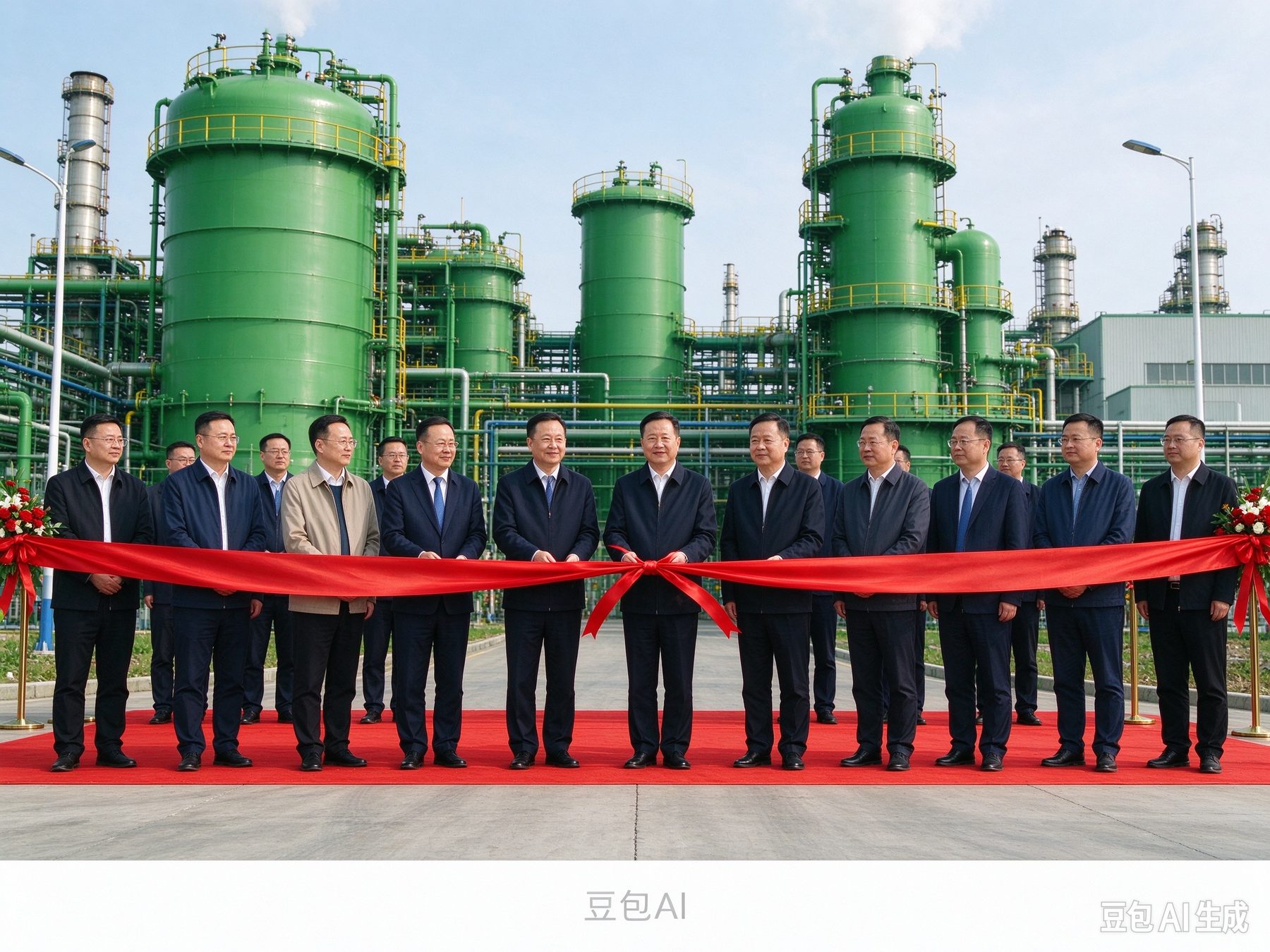
【绿色燃料国际商务网】获悉,在广袤的华北平原上,一场以氢能为纽带的区域协同绿色变革正在蓬勃兴起。从张家口坝上的风光制氢基地到北京大兴的氢能示范社区,从乌兰察布的绿氢长输管道到天津港的氢能重卡穿梭,京津冀正携手描绘一幅绿色能源发展的崭新图景,氢能产业正从“单点突破”迈向“规模应用”新阶段。2026年10月16日,京津冀氢能综合应用试点城市群工作部署会在北京大兴召开,标志着这一国家级试点正式进入全面落地实施阶段,这不仅是落实国家“十五五”规划纲要、培育新质生产力的战略举措,更是深化京津冀协同发展、探索跨区域产业协同新模式的深刻变革。
国家战略引领,氢能迎来发展新机遇。国家“十五五”规划纲要已将氢能列为前瞻布局的未来产业,其战略地位显著提升,标志着氢能正式从技术探索阶段迈入产业化、规模化发展的战略机遇期。今年上半年,工业和信息化部、财政部、国家发展改革委联合启动全国氢能综合应用试点遴选工作,通过“揭榜挂帅”方式在全国范围内遴选出5个试点城市群,并配套最高16亿元中央财政“以奖代补”支持,以真金白银引导地方结合资源禀赋与产业基础开展差异化探索,撬动社会资本共同投入氢能基础设施建设与场景应用。
今年8月,京津冀城市群凭借扎实的产业积累、丰富的应用场景和突出的区域协同优势正式获批,试点周期为4年。作为国家三大国际科技创新中心之一,京津冀先行先试的探索实践已上升为国家战略的重要组成部分,其任务不仅在于推动本地氢能产业提质升级,更在于通过跨区域产业协同、政策集成与模式创新,为全国氢能产业高质量发展提供可复制、可推广的制度经验与发展样本,服务国家“双碳”目标和新质生产力培育大局。
六省份13市(区)携手,共绘跨区域协同新蓝图。京津冀城市群是此次获批城市群中以燃料电池汽车为主要场景的城市群之一,由北京大兴区牵头,联合房山、昌平,天津滨海新区、津南,河北唐山、保定、张家口、沧州,以及山东济南、青岛,内蒙古乌兰察布、山西吕梁,共六省份13市(区)组建。这种“跨区域组队”模式巧妙破解了风光绿氢资源与工业消纳市场空间错配的难题:西部和北方出资源、出场景,东部地区出技术、出市场,实现优势互补、产业协同,规避低水平重复建设。部署会上,大兴区作为工作专班办公室介绍总体方案,13个城市(区)依次介绍试点推进计划与场景储备,六省份省级层面介绍支持政策,跨区域协同的氢能应用格局逐步清晰。
“1+N+X”生态构建,氢能应用全面开花。“十五五”期间,京津冀城市群将构建“1+N+X”氢能综合应用生态,推动氢能从交通单点示范迈向交通、工业场景联动的规模化发展。在燃料电池汽车通用场景上,以燃料电池汽车为通用场景,重点推广氢能重卡、冷链物流车等车型,依托跨区域主干高速路网统筹布局加氢站,建设“六廊十一支”氢能高速走廊,示范期四年内京津冀城市群将推广燃料电池汽车不少于1.2万辆。在工业领域规模化应用方面,立足区域内钢铁、化工等产业基础,积极探索氢冶金、氢基化工原料替代等规模化应用,北京将开展“乌兰察布风光制氢+长距离跨区域管道输送+在京石化企业炼化绿色转型”的3.5万吨/年氢基化工原料替代试点。在创新应用场景拓展方面,同时挖掘热电联供、数据中心、叉车、两轮车等创新场景,重点聚焦热电联供、备用电源、两轮车、叉车等7类应用场景共推广23个项目。
北京牵头攻关,科创赋能产业升级。北京作为国家三大国际科技创新中心之一,将重点聚焦关键装备技术攻关,用好创新平台资源,融合产学研用,强化成果转化。《北京市氢能产业发展实施方案(2026—2030年)》提出,将支持能源装备企业开展碱性、质子交换膜、阴离子交换膜等多技术路线布局,推进高效膜电极、低贵金属催化剂、镍网电极等核心材料与关键部件自主替代。
产业规模目标方面,大兴区作为牵头方,“十五五”期间将科学布局37座加氢站,建成6条氢能主廊道,率先实现氢能在长途重卡、冷链物流等场景的规模化示范,到2030年末形成氢燃料电池汽车规模化推广应用格局;北京市力争到2030年,累计推广燃料电池汽车突破万辆,建成加氢站超40座,全市氢能产业链规模突破400亿元,带动京津冀突破1000亿元。氢源保障体系建设方面,围绕“制、储、运、加”,城市群将积极推进氢源保障体系建设,北京将推动内蒙古乌兰察布绿氢进京长输管线建设,在房山区建设首都绿氢供应枢纽,“十五五”时期形成5万吨/年以上绿氢保供能力。
从政策到应用的“京津冀实践”。在北京市大兴区,一片曾经的汽车零部件厂区如今已变身北京大兴国际氢能示范区,聚集了240余家氢能产业链及相关企业,一系列氢燃料电池领域的“卡脖子”技术实现突破。北京清玮膜科技有限公司创始人熊辉深有感触:2022年,得知中国科学院化学研究所取得一项研究成果,熊辉萌生了将其产业化的念头。但落地时,周转资金紧张、产线用电需求大等问题接踵而至。示范区为团队减免厂房租金、协助申请专项课题,还改造了厂房的供电设备。
依托科研成果,熊辉带领团队研发出聚降冰片烯基阴离子交换膜,并介绍:“这是氢燃料电池及阴离子交换膜电解槽的关键部件。高端阴离子交换膜依赖进口,成本高且耐碱性差。这个产品的导电率提升25%,价格只有进口的一半。”这正是示范区承接科创成果转化的缩影。在张家口,全市已投运千余辆氢燃料电池汽车,覆盖公交、物流等领域;河钢宣钢氢冶金项目投产见效,在钢铁低碳转型上形成标杆示范。内蒙古乌兰察布至京津冀地区氢气输送管道示范工程(北京段)项目近日获批,将打通绿氢进京骨干通道。
在京津冀氢能综合应用试点的舞台上,所呈现的不仅是一种清洁能源的推广应用,更是一种区域协同发展模式的创新实践,一种发展理念的深刻变革——通过“以奖代补”撬动社会资本,通过“跨区域统筹”打破行政壁垒,通过“多元场景应用”推动氢能从示范走向规模化。这种协同模式不仅限于地理空间的联合,更体现在产业链的深度分工上:北京研发的液驱氢气压缩机,天津制造的空压机,河北生产的35兆帕加氢枪……从实验室的技术突破到生产线的产业化应用,从单一城市的先行先试到多区域的协同联动,从“六廊十一支”氢能高速走廊加快建设到氢能重卡规模化应用,从氢冶金、氢基化工的深度脱碳实践到热电联供、数据中心等创新场景拓展,京津冀正在书写中国氢能产业发展的崭新篇章,为全球能源转型贡献“中国方案”和“中国智慧”。该篇理论文章由马慧洁(中共北京市大兴区委党校讲师)与刘战武(中共北京市大兴区委党校调研室主任、副教授)撰写。
[Green Fuel International Business Network] has learned that across the vast North China Plain, a regional collaborative green transformation driven by hydrogen energy is flourishing. From the wind-to-hydrogen base on the Zhangjiakou Dam to the hydrogen energy demonstration community in Daxing, Beijing, from the green hydrogen long-distance pipeline in Ulanqab to the hydrogen-powered heavy trucks shuttling at Tianjin Port, Beijing-Tianjin-Hebei is jointly painting a new picture of green energy development. The hydrogen energy industry is moving from 'single-point breakthroughs' to a 'stage of large-scale application.' On October 16, 2026, the work deployment meeting for the integrated hydrogen energy pilot city cluster in Beijing-Tianjin-Hebei was held in Daxing, Beijing, marking the official entry of this national-level pilot into comprehensive implementation. This is not only a strategic measure to implement the national "15th Five-Year Plan" and cultivate new quality productivity, but also a profound transformation to deepen coordinated development in Beijing-Tianjin-Hebei and explore new models of cross-regional industrial collaboration.
Guided by national strategy, hydrogen energy is ushering in new development opportunities. The national "15th Five-Year Plan" outline has listed hydrogen energy as a forward-looking industry for future development, significantly elevating its strategic position, marking that hydrogen energy has officially moved from the technological exploration stage to an opportunity period for industrialization and large-scale development. In the first half of this year, the Ministry of Industry and Information Technology, the Ministry of Finance, and the National Development and Reform Commission jointly launched the selection of national comprehensive hydrogen energy application pilot projects. Through the "competition-based leadership" approach, five pilot city clusters were selected nationwide, with a maximum of 1.6 billion yuan in central government "reward instead of subsidy" support, using real financial incentives to guide localities to explore differentiation based on resource endowment and industrial foundation, leveraging social capital to jointly invest in hydrogen energy infrastructure construction and application scenarios.
In August this year, the Beijing-Tianjin-Hebei urban agglomeration was officially approved based on its solid industrial foundation, abundant application scenarios, and outstanding regional synergy advantages, with a pilot period of four years. As one of the country’s three major international science and technology innovation centers, the pioneering explorations in Beijing-Tianjin-Hebei have risen to become an important part of the national strategy. Its mission is not only to promote the quality upgrading of the local hydrogen industry, but also to provide replicable and scalable institutional experiences and development models for the high-quality development of the national hydrogen industry through cross-regional industrial collaboration, policy integration, and model innovation, serving the country’s dual carbon goals and the overall cultivation of new productivity.
Thirteen cities (districts) from six provinces joined forces to jointly draw a new blueprint for cross-regional collaboration. The Beijing-Tianjin-Hebei city cluster is one of the approved city clusters focusing on fuel cell vehicles as the main scenario. Led by Daxing District in Beijing, it joins forces with Fangshan and Changping, Binhai New Area and Jinnan in Tianjin, Tangshan, Baoding, Zhangjiakou, and Cangzhou in Hebei, as well as Jinan and Qingdao in Shandong, Ulanqab in Inner Mongolia, and Lvliang in Shanxi, forming a group of 13 cities (districts) across six provinces. This 'cross-regional team' model cleverly solves the mismatch between green hydrogen resources and industrial consumption market spaces: the western and northern regions provide resources and scenarios, while eastern regions contribute technology and markets, achieving complementary advantages and industrial collaboration, and avoiding low-level repetitive construction. At the deployment meeting, Daxing District, serving as the working group office, introduced the overall plan, the 13 cities (districts) successively presented their pilot promotion plans and scenario reserves, the provincial-level authorities of the six provinces introduced supportive policies, and the pattern of cross-regional collaborative hydrogen energy application gradually became clear.
The '1 N X' ecological construction, with comprehensive hydrogen energy applications. During the 14th Five-Year Plan period, the Beijing-Tianjin-Hebei urban agglomeration will build a '1 N X' integrated hydrogen energy application ecosystem, promoting the transition of hydrogen energy from single transportation demonstration points to large-scale development across transportation and industrial scenarios. In the general scenario of fuel cell vehicles, with fuel cell vehicles as the general scenario, the focus will be on promoting hydrogen heavy trucks, cold chain logistics vehicles, and other types of vehicles, relying on the regional main highway network to plan hydrogen refueling stations, constructing a 'six corridors and eleven branches' hydrogen energy highway network. During the four-year demonstration period, the Beijing-Tianjin-Hebei urban agglomeration will promote no fewer than 12,000 fuel cell vehicles. In terms of large-scale industrial applications, based on the regional steel, chemical, and other industrial foundations, efforts will be made to explore large-scale applications such as hydrogen metallurgy and hydrogen-based chemical raw material substitution. Beijing will carry out a pilot project for the substitution of hydrogen-based chemical raw materials with a capacity of 35,000 tons per year, featuring 'wind and solar hydrogen production in Ulanqab, long-distance cross-regional pipeline transportation, and green transformation of refining activities in Beijing's petrochemical enterprises.' For the expansion of innovative application scenarios, innovative applications such as combined heat and power, data centers, forklifts, and two-wheel vehicles will be explored. The focus will be on seven types of application scenarios including combined heat and power, backup power, two-wheel vehicles, and forklifts, promoting a total of 23 projects.
Beijing leads the research efforts, with scientific and technological innovation empowering industrial upgrading. As one of the country's three major international centers for scientific and technological innovation, Beijing will focus on tackling key equipment technologies, making full use of innovation platform resources, integrating industry, academia, research, and application, and strengthening the transformation of achievements. The "Beijing Hydrogen Energy Industry Development Implementation Plan (2026–2030)" proposes supporting energy equipment enterprises to develop multiple technological routes such as alkaline, proton exchange membrane, and anion exchange membrane, and to promote independent replacement of core materials and key components such as high-efficiency membrane electrodes, low-noble-metal catalysts, and nickel mesh electrodes.
In terms of industrial scale targets, Daxing District, as the leading party, plans to scientifically lay out 37 hydrogen refueling stations during the 15th Five-Year Plan period, build 6 main hydrogen energy corridors, and take the lead in achieving large-scale demonstration of hydrogen energy in scenarios such as long-distance heavy trucks and cold chain logistics. By the end of 2030, a pattern for the large-scale promotion and application of hydrogen fuel cell vehicles will be formed. Beijing aims to, by 2030, cumulatively promote over 10,000 fuel cell vehicles, build more than 40 hydrogen refueling stations, achieve a hydrogen energy industry chain scale exceeding 40 billion yuan, and drive the Beijing-Tianjin-Hebei region past 100 billion yuan. Regarding the construction of the hydrogen supply assurance system, focusing on 'production, storage, transportation, and refueling,' urban clusters will actively advance the construction of the hydrogen supply system. Beijing will promote the construction of a long-distance pipeline to deliver green hydrogen from Ulanqab, Inner Mongolia to Beijing, and build the Capital Green Hydrogen Supply Hub in Fangshan District, with a target of forming a green hydrogen supply capacity of over 50,000 tons per year during the 15th Five-Year Plan period.
The 'Beijing-Tianjin-Hebei Practice' from policy to application. In Daxing District, Beijing, a former auto parts factory area has now transformed into the Beijing Daxing International Hydrogen Energy Demonstration Zone, gathering more than 240 companies in the hydrogen energy industry chain and related sectors, with a series of 'bottleneck' technologies in the hydrogen fuel cell field achieving breakthroughs. Xiong Hui, founder of Beijing Qingwei Membrane Technology Co., Ltd., felt deeply about this: in 2022, upon learning that the Institute of Chemistry of the Chinese Academy of Sciences had achieved a research result, Xiong Hui conceived the idea of industrializing it. However, when implementing it, issues such as tight working capital and high electricity demand for the production line arose one after another. The demonstration zone reduced the team's factory rent, assisted in applying for special projects, and also upgraded the factory's power supply equipment.
Relying on scientific research achievements, Xiong Hui led his team to develop a polyborneol-based anion exchange membrane and explained: 'This is a key component of hydrogen fuel cells and anion exchange membrane electrolyzers. High-end anion exchange membranes depend on imports, which are costly and have poor alkali resistance. This product's conductivity has increased by 25%, and its price is only half that of imported ones.' This is precisely a microcosm of the demonstration zone undertaking the transformation of scientific and technological achievements. In Zhangjiakou, more than a thousand hydrogen fuel cell vehicles are already in operation, covering public transportation, logistics, and other fields; the Hebei Iron & Steel Xuangang hydrogen metallurgy project has been put into production, setting a benchmark for low-carbon transformation in the steel industry. The Inner Mongolia Ulanqab to Beijing-Tianjin-Hebei region hydrogen transport pipeline demonstration project (Beijing section) was recently approved, which will open up a key channel for green hydrogen entering Beijing.
On the stage of the integrated hydrogen energy application pilot in the Beijing-Tianjin-Hebei region, what is presented is not only the promotion and application of a clean energy, but also an innovative practice of regional coordinated development, and a profound transformation of development concepts — leveraging social capital through 'awards instead of subsidies,' breaking administrative barriers through 'cross-regional coordination,' and promoting hydrogen energy from demonstration to large-scale application through 'multi-scenario utilization.' This collaborative model is not limited to the combination of geographical spaces but is also reflected in the deep division of the industrial chain: hydrogen compressors driven by liquid developed in Beijing, air compressors manufactured in Tianjin, 35 MPa hydrogen dispensers produced in Hebei... From laboratory technological breakthroughs to industrialized production line applications, from the pioneering trials of a single city to multi-region coordinated linkage, from accelerating the construction of the 'six corridors and eleven branches' hydrogen energy expressways to large-scale application of hydrogen heavy trucks, from deep decarbonization practices in hydrogen metallurgy and hydrogen-based chemical industries to the expansion of innovative scenarios such as combined heat and power and data centers, the Beijing-Tianjin-Hebei region is writing a new chapter in China's hydrogen energy industry development, contributing a 'China solution' and 'China wisdom' to the global energy transition. This theoretical article is written by Ma Huijie (lecturer at the Party School of the Daxing District Committee of the CPC, Beijing) and Liu Zhanwu (Director of the Research Office and Associate Professor at the Party School of the Daxing District Committee of the CPC, Beijing).
[Source: Beijing Daily Client]
[Editor: Xiao Neng]
本网站摘录或转载的属于第三方的信息,目的在于传递更多信息,内容仅供参考。相关股票、投融资等资讯及分析并不代表本网站赞同其意见和对其真实性负责,不构成投资建议。
若不慎涉及侵权,请在相关内容刊发之日起 30 日内联系我们,我们将第一时间进行删除处理。
转载本网资讯请注明来源作者。本网原创文章、研究报告禁止转发。
Information excerpted or reprinted from third parties on this website is intended to convey more information for reference only. Related stocks, investment and financing news and analysis do not represent the endorsement of this website, nor does this website assume responsibility for their authenticity, and do not constitute investment advice.
If any content unintentionally infringes upon rights, please contact us within 30 days from the date of publication, and we will remove it as soon as possible.
When reprinting content from this website, please indicate the source and author. Original articles and research reports of this website may not be redistributed.
提交留言Submit message留下联系方式,平台将把您的需求推送给匹配的产业方Leave your contact details and we will match you with relevant industry partners.
数据来源与口径说明:本平台数据与资讯均以「唯一官方口径」采集与发布,优先采用国家部委、国家统计局、海关总署、中国氢能联盟、IEA / IRENA / IMO 等官方或政府间机构公开数据;同一指标只取一个来源,不做多源拼接。数值为公开发布值,可能因统计口径、产地与发布时间不同而存在差异,仅供参考,不构成交易依据。Data sources and methodology: all data and news on this platform are collected and published from a single official source, giving priority to public data from government bodies and intergovernmental organisations such as the National Bureau of Statistics, the General Administration of Customs, the China Hydrogen Alliance, and IEA / IRENA / IMO. One indicator has one source only and is never stitched together from multiple sources. Figures are published values and may vary with statistical scope, origin and release date. For reference only; not a basis for transactions.
相关信息Related Information同栏目 · 可直接进入各自最终页Same section · each opens its own final page
- 航天炉"点煤成金":从我国第一台自主粉煤加压气化炉到零碳负碳技术转型2026-10-12
- 18至25元对15元:绿氢成本逼近灰氢那一刻,8%至10%的项目收益是靠什么撑起来的2026-10-11
- 视频|海水制氢,中国突破!2026-10-11
- 陕西研制液氢航空地面保障系统完成全流程一体化测试2026-10-11
- 1121.05兆瓦与1062MW:2026上半年电解槽订单两个口径的差,与份额集中到46%的真相2026-10-11
- 从“气”到“氢”的一字之变 四川资阳打造成渝氢走廊氢源配送中心2026-10-10