
南疆园区提质增效“三重奏”The 'Triple Play' of Quality Improvement and Efficiency Enhancement in the Southern Xinjiang Park
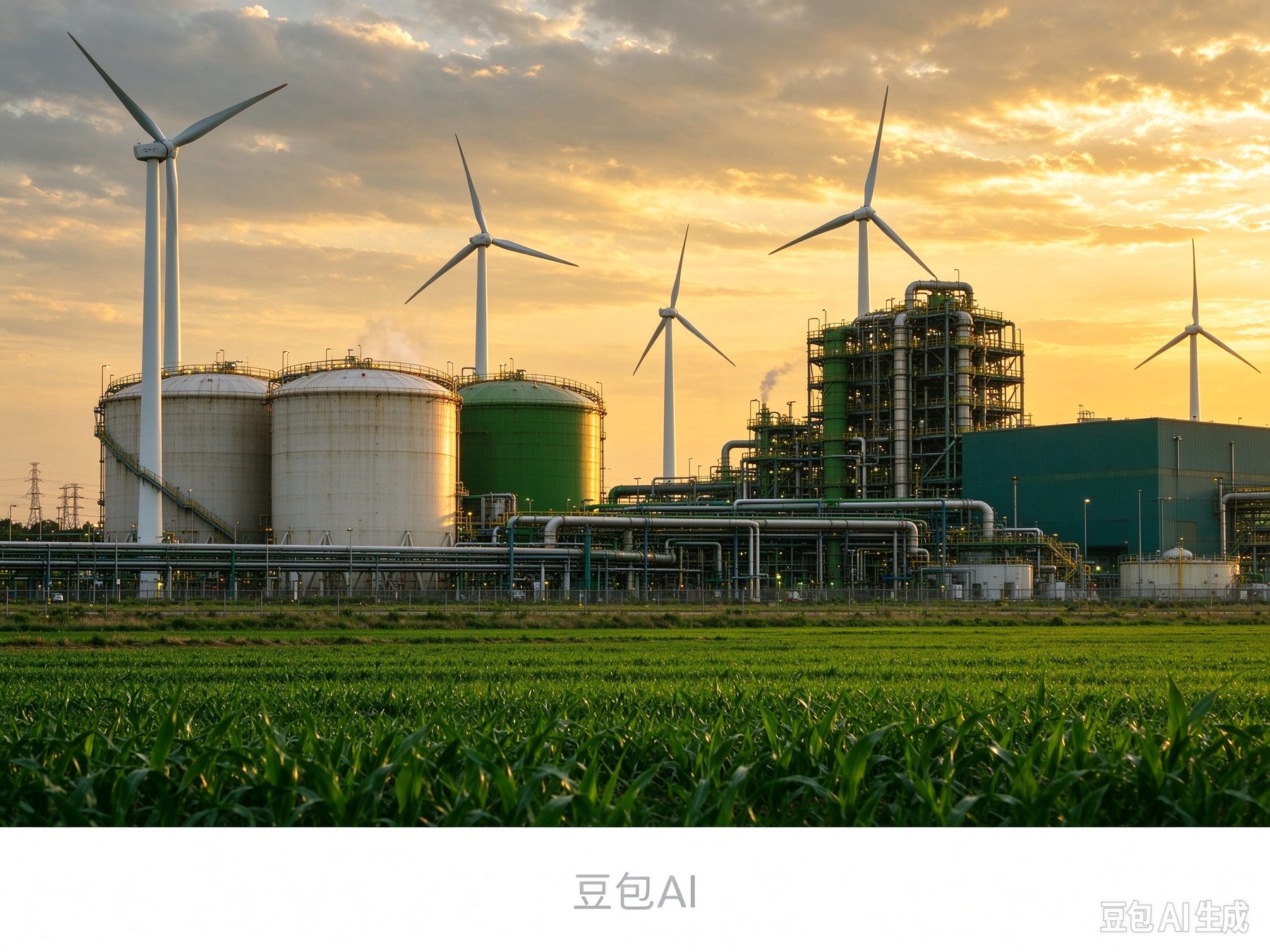
【绿色燃料国际商务网】获悉,作为新疆“棋眼”,“十四五”时期南疆四地州地区生产总值年均增长6.2%,高于全疆平均水平,这一增长离不开园区经济的有力支撑。迈入“十五五”开局之年,南疆园区的发展思路悄然转变:不再满足于单一资源的简单变现,而是立足水土光热、特色农产品、绿电、口岸等多元优势,向资源挖潜要新赛道、向链式承接要集群力、向融合升级要新空间。放眼如珍珠般散落在塔里木盆地及周边的一个个园区,招商引资、项目建设、生产作业的交响曲愈加雄浑铿锵。
深挖潜力,是南疆园区转型的第一根弦。11月9日,库车经济技术开发区内一派繁忙景象,中国石化塔河炼化有限责任公司炼化一体化项目抢抓施工窗口期,现场施工人员操作各类车辆设备抢进度、赶工期。各项目多点发力、上下游产业联动攻坚,正在将库车经开区“炼化纺”一体化从规划蓝图转化为施工实景,加速石化、聚酯纺织产业提质升级。
能源化工业态同样在升级。中国石化新疆库车绿氢示范项目已建成,成为全国规模最大光伏发电直接制绿氢项目;新疆兵能新材料科技有限责任公司年产4万吨聚甲醛续建项目开车成功,标志着库车乃至南疆从“能源输出”迈向“材料输出”。作为南疆首个产值突破600亿元的重点园区,库车经开区近年立足自身优势多维度挖掘潜力,一系列重大项目推动园区从早期以石油、天然气化工为主导的“一油独大”产业格局,转变为以能源化工为主导,装备制造、纺织服装、新型建材和农副产品精深加工等协同发展的“一主多元”产业格局。
其他园区也在打开多元业态。库尔勒经济技术开发区今年开工建设的众多项目,聚焦纺织服装产业链核心及配套环节,同时布局绿色环保、新型建材类项目,为园区产业高端化、智能化、绿色化发展提供支撑;喀什经济技术开发区依托“五口通八国、一路连欧亚”区位优势,已形成以纺织服装、商贸物流为基础,电子信息、新材料、生物医药等新兴产业协同发展的格局;和田昆冈经济技术开发区依托和田地区丰富的锂、铅锌以及其他有色金属资源优势,打造集有色金属冶炼加工、资源再生利用、科技研发及成果转化于一体的绿色智能产业园区;阿图什工业园区则从早期以服装加工、电子组装为主的单一产业,转向智能纺织、绿色制造、钒钛新材料等多元业态集群,并形成“一园四区”协同布局。采访中发现,算力、数据、空天信息等数字产业正在与当地特色制造并肩生长,南疆各地通过打破“资源即产品”的点式思维,延伸产业链条、拓展跨界合作渠道,打造互补共生的产业矩阵。
精准承接,是第二根弦。日前,借第140届中国进出口商品交易会举办契机,2026年“喀贸全球”外贸招商(广州)推介活动在广州举办,新疆喀什地区和广东省两地的相关部门、重点商协会及企业结合两地优势交流洽谈,共同推动粤港澳大湾区外向型产业梯度转移。今年,中国(新疆)自由贸易试验区喀什片区发挥平台优势,推进94个总投资245亿元的重点项目,推动4个百亿级产业集群成型;依托公路口岸“属地直通”模式,通关时间压缩至6至8小时,为承接外向型产业筑牢通道底座,推动“通道经济”稳步转向“产业经济”。
喀什片区还把功夫下在产业“落地”上,创新推出“保税易货+区内仓储”新模式,投入8.3亿元建成喀什国际枢纽港,落地全国首趟跨境海铁公多式联运“一单制”业务;截至9月,喀什片区经营主体达6389家,较揭牌之初增长214%。在喀什中亚南亚工业园区,源自深圳的喀什安川智能装备科技有限公司主营精密铸模,一期智能制造工厂投产后,二期新材料精密铸造车间正加快建设,建成后不仅实现自身原料回收、产品成型闭环,还可为园区内装备、电气企业提供铸模配套服务,带动本地装备制造配套能力提升;叶城工业园区立足矿产资源,走“探—采—选—冶—固废循环”一体化承接路线,引入龙头企业布局铅锌、锂矿深加工链条。
承接不等于简单复制东部产能。在围绕化学原料及化学制品制造业、纺织业、废旧资源综合利用业三大主导产业发展的温宿产业园区,江苏申久(集团)有限公司联合新疆中泰纺织服装集团有限公司等企业组建的新疆申泰化纤有限公司,依托园区产业基础优势,分两期建设年产100万吨聚酯差别化纤维项目。11月6日,温宿产业园区管委会相关负责人表示,园区精准承接东部地区产业转移,补齐了原料在外、精深加工不足、附加值低的短板,通过补链、延链、强链,实现从“单点突破”向“集群崛起”迈进。当各园区不再单纯比拼优惠政策“抢项目”,而是对照产业链图谱找缺口、引配套,优先引进能带动当地企业协同发展的项目时,产业发展便呈现串珠成链、聚链成群之势。
提质扩容,是第三根弦。11月7日,在阿克苏阿拉尔高新技术产业开发区,新疆腾宇光电科技有限公司董事长任旭全介绍,选择来南疆投资,看中的正是这里优惠政策多、投资环境好;公司建成的超薄柔性玻璃一期生产线每天可以生产1.5万片像A4纸一样薄的玻璃,将来二期生产线建成后,产量还会大幅增加。阿克苏阿拉尔高新区采取“一园四区”管理模式,以阿克苏园区、阿拉尔园区为核心,辐射带动阿克苏纺织工业城、新疆生产建设兵团第一师六团产业园,并明确“一特三新”的现代产业方向,即以高端纺织为特色基础产业,以精细化工、新能源、新材料、高端装备制造为重点培育方向,构建特色鲜明、结构优化的产业集群。
在阿克苏地区,园区之间的联动协作已不是新鲜事,各园区通过链式协同、错位发展、区域协作,再加上与新疆生产建设兵团第一师阿拉尔市园区、北疆产业相近园区、援疆省市园区的互动协作,推动产业从单点布局走向集群融合。在克孜勒苏柯尔克孜自治州,一批智能工厂陆续建成,新疆紫金有色金属有限公司、阿克陶科邦锰业制造有限公司、克州天山水泥有限责任公司先后完成数智化改造,5G、AI深度嵌入冶炼、建材生产全流程,单个工厂智能化升级之后,进一步推动园区整体协同管控,由一厂智能升级走向园区整体智慧化转型;喀什中亚南亚工业园区内,跨境仓储、智能分拣功能齐备,物流时效大幅压缩,园区和城区功能衔接。各园区还与口岸、综保区、新疆自贸试验区平台联动融合,打开了向西开放的更大空间。
园区提质扩容,不等于简单扩大园区面积、上马更多新项目。目前,南疆园区的提质已跳出单一企业技改升级的单点突破,朝着产业内部循环、产城共生、园区与开放平台联动的深度融合方向迈进;在南疆五地州,连县市园区也不再是城市边缘一块孤立的工业地块,而是产业循环枢纽、就业富民平台、向西开放支点,产业、城镇、民生、开放多维度交织融合。随着这根弦的拨动,南疆园区升级的标尺不再只看产值增速,更多转向提升产业链韧性、绿色低碳水平、带动就业能力、对外开放能级的考量。
According to the Green Fuel International Business Network, as the 'chess eye' of Xinjiang, during the 14th Five-Year Plan period, the annual GDP growth of the four southern regions averaged 6.2%, higher than the overall average level of Xinjiang. This growth is inseparable from the strong support of the park economy. Entering the opening year of the 15th Five-Year Plan, the development approach of southern Xinjiang's parks has quietly shifted: no longer satisfied with simply monetizing a single resource, they are instead leveraging multiple advantages such as water, soil, light, heat, specialty agricultural products, green electricity, and ports, seeking new tracks through resource potential, cluster strength through chain-based integration, and new space through upgraded integration. Looking at the parks scattered like pearls across the Tarim Basin and surrounding areas, the symphony of investment attraction, project construction, and production operations is becoming more vigorous and resounding.
Deepening potential is the first string in the transformation of the southern Xinjiang park. On November 9, the Kuqa Economic and Technological Development Zone was bustling with activity. China Petrochemical Taha Refining & Chemical Co., Ltd.'s integrated refining and chemical project was seizing the construction window, with on-site workers operating various vehicles and equipment to speed up progress and meet deadlines. Multiple projects are making efforts at many points, with coordinated efforts across upstream and downstream industries, turning the Kuqa Economic Development Zone's 'refining and textile' integration from a planning blueprint into a construction reality, accelerating the quality and upgrading of the petrochemical and polyester textile industries.
The energy chemical industry is also upgrading. The Sinopec Kuqa Green Hydrogen Demonstration Project in Xinjiang has been completed, becoming the largest photovoltaic power-to-green hydrogen project in the country. The annual 40,000-ton polyformaldehyde expansion project of Xinjiang Bingneng New Material Technology Co., Ltd. has started operation, marking Kuqa, and even southern Xinjiang, transitioning from 'energy export' to 'material export.' As the first key industrial park in southern Xinjiang with an output value exceeding 60 billion yuan, Kuqa Economic and Technological Development Zone has, in recent years, leveraged its own advantages to explore multi-dimensional potential. A series of major projects have driven the park to shift from an early industry pattern dominated by oil and natural gas chemical industries, known as 'one oil, dominated,' to an industrial pattern led by energy chemical industries, with coordinated development of equipment manufacturing, textile and apparel, new building materials, and deep processing of agricultural and sideline products, known as 'one main, diversified.'
Other industrial parks are also opening up to diversified business formats. In Korla Economic and Technological Development Zone, numerous projects that started construction this year focus on the core and supporting segments of the textile and apparel industry chain, while also planning projects in green environmental protection and new building materials, providing support for the high-end, intelligent, and green development of the park's industries. Kashgar Economic and Technological Development Zone, leveraging the location advantage of 'connected to eight countries through five ports, one road linking Europe and Asia,' has formed a pattern where textile and apparel, commerce, and logistics serve as the foundation, coordinated with the development of emerging industries such as electronic information, new materials, and biomedicine. Hotan Kungang Economic and Technological Development Zone, utilizing the region's abundant lithium, lead-zinc, and other non-ferrous metal resources, is building a green and intelligent industrial park integrating non-ferrous metal smelting and processing, resource recycling, technology research and development, and results transformation. Atushi Industrial Park has shifted from a single-industry focus on clothing processing and electronic assembly in its early stages to a diversified cluster including intelligent textiles, green manufacturing, and vanadium-titanium new materials, forming a 'one park, four zones' collaborative layout. Interviews revealed that digital industries such as computing power, data, and aerospace information are growing alongside local characteristic manufacturing. In Southern Xinjiang, regions are breaking the point-based thinking of 'resources as products,' extending industrial chains, expanding cross-sector cooperation channels, and creating complementary and symbiotic industrial matrices.
Precise engagement is the second string. Recently, taking advantage of the 140th China Import and Export Fair, the 2026 'Kamao Global' foreign trade investment promotion (Guangzhou) event was held in Guangzhou. Relevant departments, key trade associations, and enterprises from Xinjiang’s Kashgar region and Guangdong province exchanged and negotiated based on the strengths of both regions, jointly promoting the gradient transfer of export-oriented industries in the Guangdong-Hong Kong-Macao Greater Bay Area. This year, the Kashgar section of the China (Xinjiang) Pilot Free Trade Zone leveraged its platform advantages to advance 94 key projects with a total investment of 24.5 billion yuan, fostering the formation of four industrial clusters worth over ten billion yuan each; relying on the 'local direct access' model of highway ports, customs clearance time has been reduced to 6–8 hours, laying a solid passage foundation for accommodating export-oriented industries and steadily shifting from a 'channel economy' to an 'industrial economy'.
The Kashgar area has also focused on the 'implementation' of industries, innovatively launching a new model of 'bonded barter with in-zone warehousing,' investing 830 million yuan to build the Kashgar International Hub Port, and implementing the nation's first cross-border sea-rail multimodal transport 'single order' business. As of September, the Kashgar area had 6,389 operating entities, an increase of 214% compared to when it was first unveiled. In the Kashgar Central Asia-South Asia Industrial Park, Kashgar Yaskawa Intelligent Equipment Technology Co., Ltd., originating from Shenzhen, specializes in precision casting. After the first-phase smart manufacturing factory went into production, the second-phase new material precision casting workshop is being rapidly constructed. Once completed, it will not only achieve a closed loop for its own raw material recycling and product forming but also provide mold supporting services for equipment and electrical companies in the park, driving the enhancement of local equipment manufacturing support capabilities. The Yecheng Industrial Park, based on mineral resources, follows an integrated route of 'exploration—mining—selection—smelting—solid waste recycling,' introducing leading enterprises to develop the deep processing chains of lead-zinc and lithium mines.
Undertaking industries does not equal simply copying the production capacity of the eastern region. In the Wensu Industrial Park, which focuses on the development of three leading industries—chemical raw materials and chemical products manufacturing, textile industry, and comprehensive utilization of waste resources—Xinjiang Shentai Chemical Fiber Co., Ltd., established by Jiangsu Shenjiu (Group) Co., Ltd. in collaboration with Xinjiang Zhongtai Textile and Garment Group Co., Ltd., is leveraging the park's industrial foundation to build a differentiated polyester fiber project with an annual production capacity of 1 million tons in two phases. On November 6, a relevant official from the Wensu Industrial Park Management Committee stated that the park has accurately undertaken industrial transfers from the eastern region, addressing shortcomings such as dependence on external raw materials, insufficient deep processing, and low added value. By supplementing, extending, and strengthening the industrial chain, it has achieved the transition from 'single-point breakthroughs' to 'cluster rise.' When each industrial park no longer simply competes for projects through preferential policies but instead identifies gaps in the industrial chain and introduces supporting projects, prioritizing those that can drive local enterprise collaboration, industrial development takes on the momentum of connecting beads to form chains and aggregating chains into clusters.
Quality improvement and capacity expansion are the third string. On November 7, in the Aksu Aral High-tech Industrial Development Zone, Ren Xuqian, chairman of Xinjiang Tengyu Optoelectronics Technology Co., Ltd., introduced that the reason for choosing to invest in Southern Xinjiang was precisely the many preferential policies and good investment environment here. The company’s first-phase production line for ultra-thin flexible glass can produce 15,000 sheets per day, as thin as A4 paper. When the second-phase production line is completed in the future, the output will increase significantly. The Aksu Aral High-tech Zone adopts a 'one park, four zones' management model, taking the Aksu Park and Aral Park as the core, radiating and driving the Aksu Textile Industrial City and the First Division, Sixth Regiment Industrial Park of the Xinjiang Production and Construction Corps. It also clarifies the modern industrial direction of 'one special, three new,' that is, with high-end textiles as the featured foundational industry, and fine chemicals, new energy, new materials, and high-end equipment manufacturing as key cultivation directions, forming a distinct and structurally optimized industrial cluster.
In the Aksu region, coordination and collaboration between industrial parks is no longer a novelty. The parks promote the industry’s shift from single-point layout to cluster integration through chain-type collaboration, staggered development, regional cooperation, and interactive collaboration with the First Division of the Xinjiang Production and Construction Corps in Aral City, parks in northern Xinjiang with similar industries, and parks from provinces and cities aiding Xinjiang. In Kizilsu Kirghiz Autonomous Prefecture, a number of smart factories have been built successively. Xinjiang Zijin Nonferrous Metals Co., Ltd., Aktau Kebang Manganese Manufacturing Co., Ltd., and Kizilsu Tianshan Cement Co., Ltd. have successively completed digital and intelligent transformation, with 5G and AI deeply embedded throughout the smelting and building materials production process. After upgrading a single factory for intelligence, it further promotes the overall collaborative management of the park, moving from upgrading one factory to the overall intelligent transformation of the entire park. In the Kashgar Central Asia-South Asia Industrial Park, cross-border warehousing and intelligent sorting functions are fully equipped, significantly shortening logistics time and ensuring the connection between the park and the urban area. The parks also integrate with ports, comprehensive bonded zones, and the Xinjiang Free Trade Zone platform, opening up greater space for opening to the west.
Upgrading and expanding park zones does not simply mean increasing the area of the parks or launching more new projects. Currently, the quality improvement of parks in southern Xinjiang has moved beyond the isolated breakthroughs of single enterprises' technological upgrades, heading towards a direction of deep integration within industrial cycles, city-industry symbiosis, and interaction between parks and open platforms. In the five prefectures of southern Xinjiang, even county-level parks are no longer isolated industrial plots on the outskirts of cities, but have become industrial cycle hubs, platforms for employment and wealth creation, and focal points for opening up to the west, with multidimensional integration of industry, towns, livelihoods, and openness. With this shift, the benchmark for upgrading parks in southern Xinjiang is no longer just focused on growth in industrial output, but increasingly considers enhancing industrial chain resilience, green and low-carbon levels, employment-driving capacity, and the level of openness.
本网站摘录或转载的属于第三方的信息,目的在于传递更多信息,内容仅供参考。相关股票、投融资等资讯及分析并不代表本网站赞同其意见和对其真实性负责,不构成投资建议。
若不慎涉及侵权,请在相关内容刊发之日起 30 日内联系我们,我们将第一时间进行删除处理。
转载本网资讯请注明来源作者。本网原创文章、研究报告禁止转发。
Information excerpted or reprinted from third parties on this website is intended to convey more information for reference only. Related stocks, investment and financing news and analysis do not represent the endorsement of this website, nor does this website assume responsibility for their authenticity, and do not constitute investment advice.
If any content unintentionally infringes upon rights, please contact us within 30 days from the date of publication, and we will remove it as soon as possible.
When reprinting content from this website, please indicate the source and author. Original articles and research reports of this website may not be redistributed.
提交留言Submit message留下联系方式,平台将把您的需求推送给匹配的产业方Leave your contact details and we will match you with relevant industry partners.
数据来源与口径说明:本平台数据与资讯均以「唯一官方口径」采集与发布,优先采用国家部委、国家统计局、海关总署、中国氢能联盟、IEA / IRENA / IMO 等官方或政府间机构公开数据;同一指标只取一个来源,不做多源拼接。数值为公开发布值,可能因统计口径、产地与发布时间不同而存在差异,仅供参考,不构成交易依据。Data sources and methodology: all data and news on this platform are collected and published from a single official source, giving priority to public data from government bodies and intergovernmental organisations such as the National Bureau of Statistics, the General Administration of Customs, the China Hydrogen Alliance, and IEA / IRENA / IMO. One indicator has one source only and is never stitched together from multiple sources. Figures are published values and may vary with statistical scope, origin and release date. For reference only; not a basis for transactions.
相关信息Related Information同栏目 · 可直接进入各自最终页Same section · each opens its own final page
- 航天炉"点煤成金":从我国第一台自主粉煤加压气化炉到零碳负碳技术转型2026-10-12
- 18至25元对15元:绿氢成本逼近灰氢那一刻,8%至10%的项目收益是靠什么撑起来的2026-10-11
- 视频|海水制氢,中国突破!2026-10-11
- 陕西研制液氢航空地面保障系统完成全流程一体化测试2026-10-11
- 1121.05兆瓦与1062MW:2026上半年电解槽订单两个口径的差,与份额集中到46%的真相2026-10-11
- 从“气”到“氢”的一字之变 四川资阳打造成渝氢走廊氢源配送中心2026-10-10