
氢能产业迎来商业化大考:补贴逐步退出,规模与成本如何接续The hydrogen energy industry faces a major commercial test: as subsidies are gradually withdrawn, how will scale and costs follow?
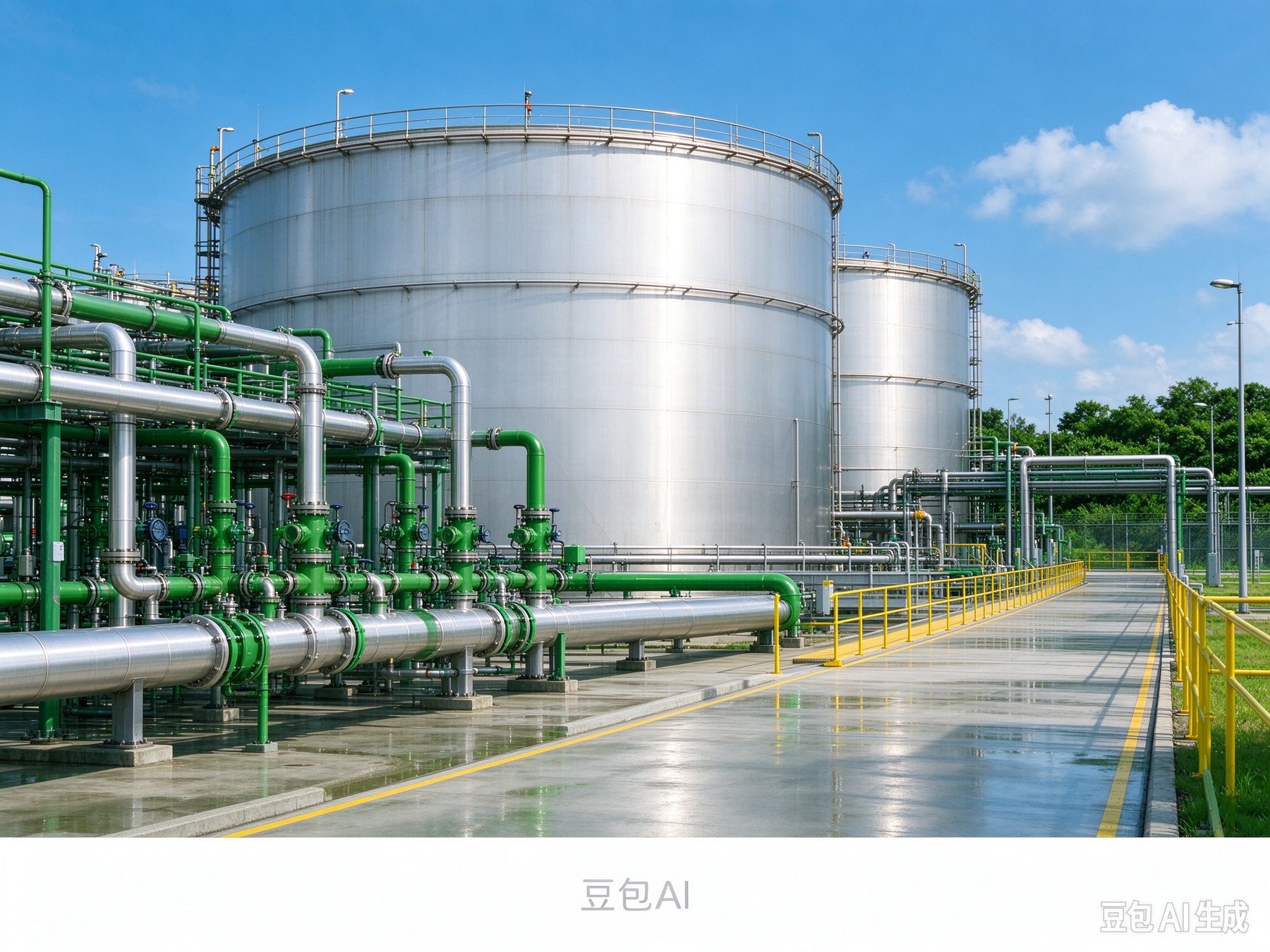
从示范应用走向规模化、商业化,氢能产业正迎来新的发展关口。中国节能协会副秘书长兼氢能专委会负责人柴博近日表示,上一轮燃料电池汽车示范城市群已经完成技术可行性验证,累计推广燃料电池汽车突破4万辆,加氢站超过620座,可再生能源制氢年产能超过25万吨,一批十万吨级绿氢项目和百万吨级氢基项目陆续投产。“十五五”时期,氢能产业要回答更难的问题——补贴逐步退出之后,氢能能否在市场上站住。
随着应用场景不断拓展,氢能的价值已不再局限于燃料电池汽车,而是逐步延伸至工业脱碳、电力调节、分布式供能等领域。如何发挥氢能在能源转型中的作用,同时破解制取成本、储运效率和市场需求等难题,成为产业下一阶段要解决的重中之重。
从产业基础看,我国氢能产业已经具备一定规模。中关村氢能与燃料电池技术创新产业联盟秘书长卢琛钰介绍,截至2025年底,全国氢气年产能超过5100万吨,可再生能源制氢建成投运年产能超过25万吨,较上年翻倍增长。燃料电池汽车推广、加氢基础设施建设持续推进,产业链上下游协同发展,氢能正从交通领域的示范应用,向更多能源和工业场景延伸。
柴博指出,氢能不仅可以服务交通运输低碳化,也有望在可再生能源消纳、能源系统调节和工业深度脱碳中发挥作用。氢能具有三重属性,既是可替代高碳能源、服务工业建筑和交通终端的二次能源,也是能够将可再生能源电力转化为跨区域、跨时段调配能力的能源载体,还是可直接用于炼化、化工、冶金等领域的工业原料。
不过,氢能产业商业化条件尚未完全成熟。卢琛钰直言,当前绿氢在氢气总量中的占比仍然有限,电解水制氢与化石能源制氢相比尚不具备普遍经济性;储运基础设施仍在完善,多数新兴应用场景还处于示范阶段,可持续的商业模式尚未完全形成。如何把技术优势转化为成本优势,再转化为稳定的市场需求,是产业必须面对的现实问题。
在上述背景下,越来越多的地区因地制宜开展相关探索。作为重大技术装备制造基地,四川省德阳市目前已集聚近20家氢能企业,形成覆盖制、储、输、加、用的产业链布局,研制出电解水制氢设备、高压储氢罐、纯氢燃机、氢能重卡等产品。今年9月,工业和信息化部、财政部、国家发展改革委三部门联合批复5个城市群开展国家氢能综合应用试点,试点期4年,中央财政“以奖代补”、单个城市群奖励上限16亿元。德阳与成都、攀枝花一道,作为新疆—成渝城市群的重要组成部分入选。
与上一轮燃料电池汽车示范不同,此轮试点构建“1+N+X”应用生态,从车端扩展到绿色氨醇、氢冶金等工业深度脱碳场景,并提出到2030年终端用氢均价降至25元/千克以下、燃料电池汽车保有量翻番至10万辆的目标。
氢能产业要从示范走向商业化,离不开关键技术持续突破,但技术进步不能仅以实验室指标衡量,还要经受规模化制造、长期运行和实际工况的检验。在制氢环节,多条技术路线并行发展仍是当前产业的重要特征。鸿基创能科技(广州)股份有限公司董事长兼首席技术官叶思宇指出,碱性电解水、质子交换膜电解水、阴离子交换膜电解水以及高温固体氧化物电解水等技术各有优劣,目前尚不存在能够覆盖所有场景、同时满足技术与成本目标的单一技术路线。
关键材料是影响制氢装备性能和成本的重要因素。叶思宇表示,膜电极成本占其单品成本可达60%,催化剂、质子交换膜、气体扩散层等构成主要成本与技术门槛。与此同时,燃料电池电堆、膜电极、双极板等核心部件国产化率虽已整体超过90%,部分高端材料仍处于小批量应用阶段。中试验证也在不断落地,在东方电气氢产业科技应用示范园,光伏发电与质子交换膜电解水制氢装置直接耦合,园区还展示了工业副产物纯化制氢、余热固体氧化物制氢等多种技术路线,并配置高压气态、有机液态、固体颗粒和氢化金属等储氢装备。
“十五五”时期,氢能产业发展的关键,是在技术进步与市场需求之间建立更稳定的联系。中国机械工业联合会党委副书记、副会长张文宏认为,氢能产业应坚持创新驱动、场景牵引和开放协同,通过多元场景扩大应用规模,带动装备迭代和成本下降。柴博则强调坚持“宜电则电、宜氢则氢”,不能因为政策鼓励就让氢能在所有领域一拥而上,对于钢铁、化工等难减排工业环节以及部分重型交通和分布式供能场景,应结合实际用能条件,比较不同技术路线的成本和减排效果。
制度和标准建设同样不可缺位。卢琛钰介绍,截至今年8月,我国现行有效氢能国家标准180项,正在制修订114项,已覆盖制、储、输、用全产业链。
From demonstration applications to large-scale commercialization, the hydrogen energy industry is entering a new stage of development. Chai Bo, Deputy Secretary-General of the China Energy Conservation Association and head of the Hydrogen Energy Special Committee, recently stated that the previous round of fuel cell vehicle demonstration city clusters has already completed technical feasibility verification, with the total promotion of fuel cell vehicles exceeding 40,000 units, more than 620 hydrogen refueling stations, and an annual renewable energy hydrogen production capacity of over 250,000 tons. A batch of 100,000-ton-level green hydrogen projects and million-ton-level hydrogen-based projects have been gradually put into production. During the 15th Five-Year Plan period, the hydrogen energy industry faces a more difficult question — after subsidies gradually withdraw, can hydrogen energy stand in the market on its own?
As application scenarios continue to expand, the value of hydrogen energy is no longer limited to fuel cell vehicles but is gradually extending to industrial decarbonization, power regulation, distributed energy supply, and other fields. How to leverage hydrogen energy in the energy transition while solving challenges such as production costs, storage and transportation efficiency, and market demand has become the top priority for the next stage of the industry.
From the perspective of industrial foundation, China's hydrogen energy industry has already reached a certain scale. Lu Chenyu, Secretary General of the Zhongguancun Hydrogen Energy and Fuel Cell Technology Innovation Industry Alliance, introduced that by the end of 2025, the national annual hydrogen production capacity will exceed 51 million tons, and the annual production capacity of renewable energy-based hydrogen will exceed 250 thousand tons, doubling compared to the previous year. The promotion of fuel cell vehicles and the construction of hydrogen refueling infrastructure continue to advance, and the upstream and downstream of the industrial chain are developing synergistically. Hydrogen energy is extending from demonstration applications in the transportation sector to more energy and industrial scenarios.
Chai Bo pointed out that hydrogen energy can not only serve the decarbonization of transportation but is also expected to play a role in the consumption of renewable energy, the adjustment of energy systems, and deep industrial decarbonization. Hydrogen energy has three key attributes: it is not only a secondary energy source that can replace high-carbon energy and serve industrial buildings and transportation terminals, but also an energy carrier capable of converting renewable electricity into cross-regional and cross-time allocation capabilities; additionally, it can be directly used as an industrial raw material in fields such as refining, chemical, and metallurgy.
However, the conditions for the commercialization of the hydrogen energy industry are not yet fully mature. Lu Chenyu stated bluntly that the current share of green hydrogen in total hydrogen production is still limited, and compared with hydrogen produced from fossil fuels, water electrolysis for hydrogen production is not yet universally economical; storage and transportation infrastructure is still being improved, and most emerging application scenarios are still at the demonstration stage, with a sustainable business model not yet fully formed. How to transform technological advantages into cost advantages, and then into stable market demand, is a practical issue that the industry must face.
Against this background, more and more regions are conducting relevant explorations tailored to local conditions. As a major manufacturing base for key technological equipment, Deyang City in Sichuan Province has currently gathered nearly 20 hydrogen energy enterprises, forming an industrial chain layout covering production, storage, transportation, refueling, and utilization, and has developed products such as electrolysis water hydrogen production equipment, high-pressure hydrogen storage tanks, pure hydrogen engines, and hydrogen-powered heavy trucks. In September this year, the Ministry of Industry and Information Technology, the Ministry of Finance, and the National Development and Reform Commission jointly approved five urban clusters to carry out national hydrogen energy comprehensive application pilots, with a pilot period of four years. The central government provides incentives through awards instead of subsidies, with a maximum award of 1.6 billion yuan per urban cluster. Deyang, together with Chengdu and Panzhihua, was selected as an important part of the Xinjiang–Chengdu-Chongqing urban cluster.
Unlike the previous round of fuel cell vehicle demonstrations, this round of pilots constructs a “1 N X” application ecosystem, expanding from vehicles to industrial deep decarbonization scenarios such as green ammonia, methanol, and hydrogen metallurgy. It also sets targets to reduce the terminal hydrogen price to below 25 yuan/kg by 2030 and to double the number of fuel cell vehicles to 100,000 units.
For the hydrogen energy industry to move from demonstration to commercialization, continuous breakthroughs in key technologies are indispensable. However, technological progress should not be measured solely by laboratory indicators; it must also withstand the tests of large-scale manufacturing, long-term operation, and real-world conditions. In the hydrogen production segment, multiple technological routes developing in parallel remain an important feature of the current industry. Ye Siyu, Chairman and Chief Technology Officer of Hongji Chuangneng Technology (Guangzhou) Co., Ltd., pointed out that alkaline water electrolysis, proton exchange membrane water electrolysis, anion exchange membrane water electrolysis, and high-temperature solid oxide water electrolysis each have their own advantages and disadvantages. Currently, there is no single technological route that can cover all scenarios while meeting both technical and cost objectives.
Key materials are important factors affecting the performance and cost of hydrogen production equipment. Ye Siyu stated that the cost of membrane electrodes can account for up to 60% of the unit cost, with catalysts, proton exchange membranes, and gas diffusion layers constituting the main costs and technical barriers. At the same time, although the localization rate of core components such as fuel cell stacks, membrane electrodes, and bipolar plates has overall exceeded 90%, some high-end materials are still in the stage of small-batch applications. Pilot-scale verification is also continuously being implemented. At the Dongfang Electric Hydrogen Industry Technology Application Demonstration Park, photovoltaic power generation is directly coupled with proton exchange membrane water electrolysis hydrogen production devices. The park also showcases various technological routes, such as hydrogen production from purification of industrial by-products and hydrogen production from waste heat via solid oxide, and is equipped with hydrogen storage devices including high-pressure gas, organic liquid, solid particles, and metal hydrides.
During the "15th Five-Year Plan" period, the key to the development of the hydrogen energy industry is to establish a more stable connection between technological progress and market demand. Zhang Wenhong, Deputy Secretary of the Party Committee and Vice President of the China Machinery Industry Federation, believes that the hydrogen energy industry should adhere to innovation-driven, scenario-led, and open collaboration approaches, expanding application scale through diverse scenarios to drive equipment iteration and cost reduction. Chai Bo emphasizes sticking to the principle of "use electricity where possible, use hydrogen where suitable" and not letting hydrogen energy rush into all fields simply because of policy encouragement. For industrial sectors with difficult emissions reductions, such as steel and chemical industries, as well as certain heavy-duty transportation and distributed energy supply scenarios, actual energy use conditions should be considered, comparing the costs and emission reduction effects of different technological routes.
Institutional and standard construction is equally indispensable. Lu Chenyu introduced that, as of August this year, China has 180 currently effective national standards for hydrogen energy, with 114 being formulated or revised, covering the entire industry chain from production, storage, and transportation to use.
[Source: China Energy News]
[Editor: Xiao Neng]
本网站摘录或转载的属于第三方的信息,目的在于传递更多信息,内容仅供参考。相关股票、投融资等资讯及分析并不代表本网站赞同其意见和对其真实性负责,不构成投资建议。
若不慎涉及侵权,请在相关内容刊发之日起 30 日内联系我们,我们将第一时间进行删除处理。
转载本网资讯请注明来源作者。本网原创文章、研究报告禁止转发。
Information excerpted or reprinted from third parties on this website is intended to convey more information for reference only. Related stocks, investment and financing news and analysis do not represent the endorsement of this website, nor does this website assume responsibility for their authenticity, and do not constitute investment advice.
If any content unintentionally infringes upon rights, please contact us within 30 days from the date of publication, and we will remove it as soon as possible.
When reprinting content from this website, please indicate the source and author. Original articles and research reports of this website may not be redistributed.
提交留言Submit message留下联系方式,平台将把您的需求推送给匹配的产业方Leave your contact details and we will match you with relevant industry partners.
数据来源与口径说明:本平台数据与资讯均以「唯一官方口径」采集与发布,优先采用国家部委、国家统计局、海关总署、中国氢能联盟、IEA / IRENA / IMO 等官方或政府间机构公开数据;同一指标只取一个来源,不做多源拼接。数值为公开发布值,可能因统计口径、产地与发布时间不同而存在差异,仅供参考,不构成交易依据。Data sources and methodology: all data and news on this platform are collected and published from a single official source, giving priority to public data from government bodies and intergovernmental organisations such as the National Bureau of Statistics, the General Administration of Customs, the China Hydrogen Alliance, and IEA / IRENA / IMO. One indicator has one source only and is never stitched together from multiple sources. Figures are published values and may vary with statistical scope, origin and release date. For reference only; not a basis for transactions.
相关信息Related Information同栏目 · 可直接进入各自最终页Same section · each opens its own final page
- 河南三城入选国家氢能试点2026-10-12
- 河南三城“氢”装上阵 郑州、鄂尔多斯建立“双主责”协同机制2026-10-12
- 多用户绿电直连项目申报启动!石家庄钢铁、石化、零碳园区等迎来绿电利用新机遇2026-10-11
- 我国氢能产业进入发展快车道2026-10-11
- 工信部《工业绿色低碳发展“十五五”规划》:2030年工业碳达峰与500个零碳工厂2026-10-10
- 内蒙古唯一、全国3个全链条试点之一 包头氢能产业向新向优2026-10-09